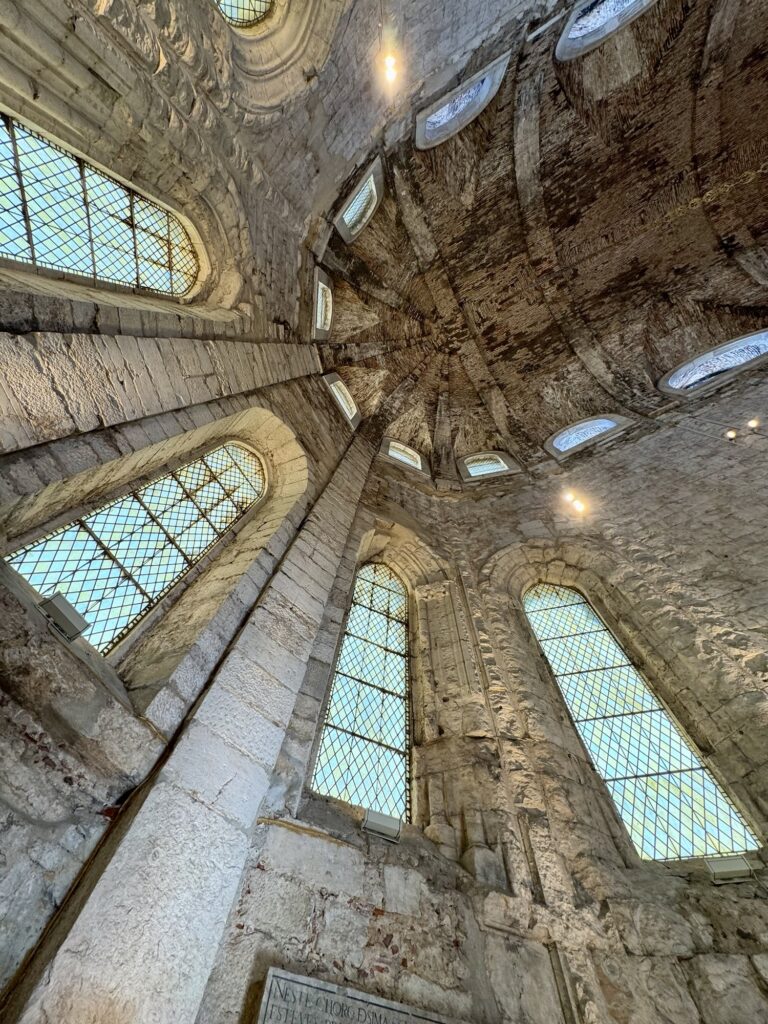
In today’s hunt for archaeology fun, we continued onward (and uphill) to the Carmo Archaeological Museum, which is built inside the former Carmo Convent, which ceased to be with the 1755 Lisbon earthquake.
Friends, I was not prepared.
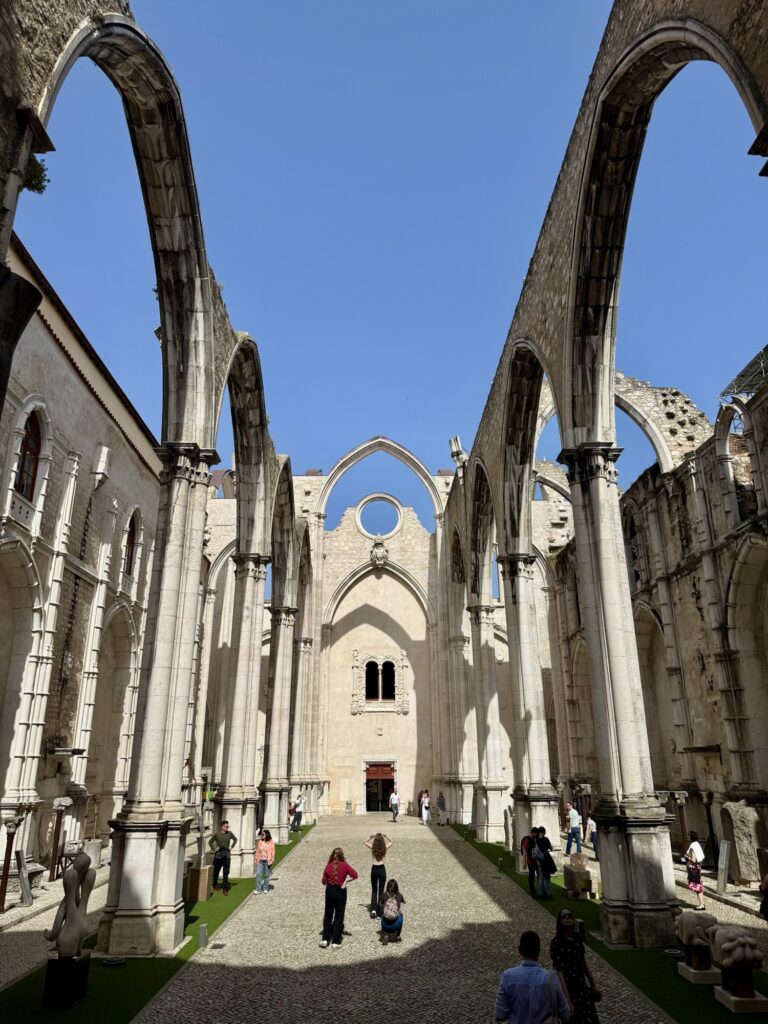
See, the convent collapsed during the earthquake, and was never repaired. Eventually, the site was taken over by a group of archaeologists, and it became a museum unlike any other I’ve ever seen.
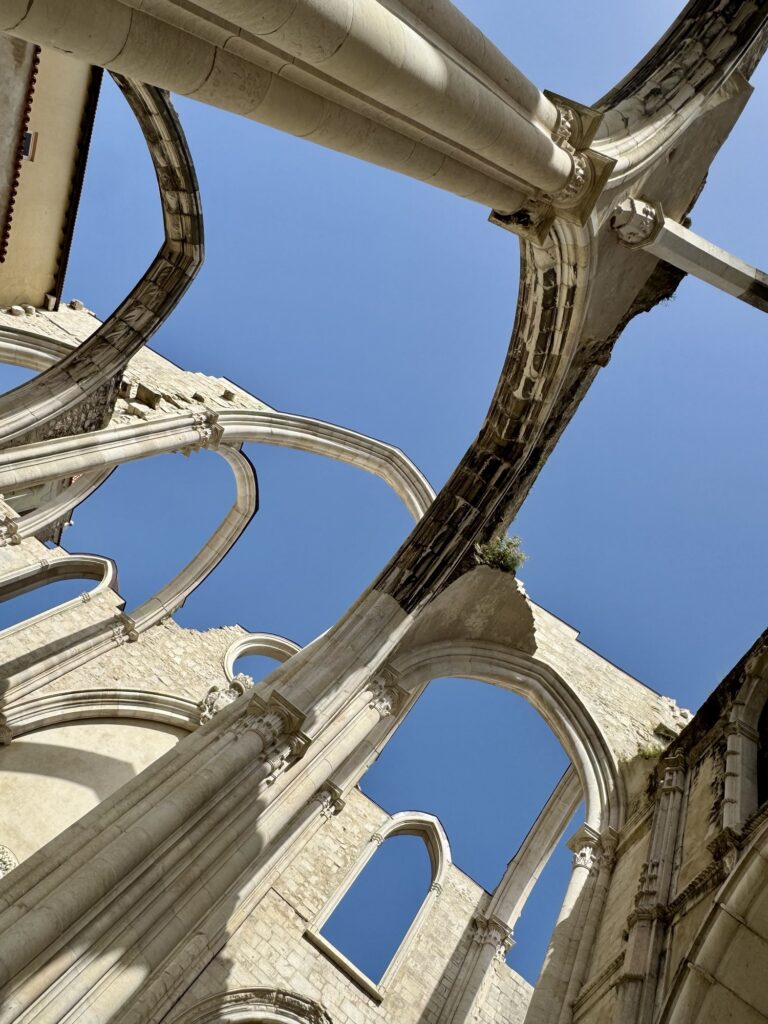
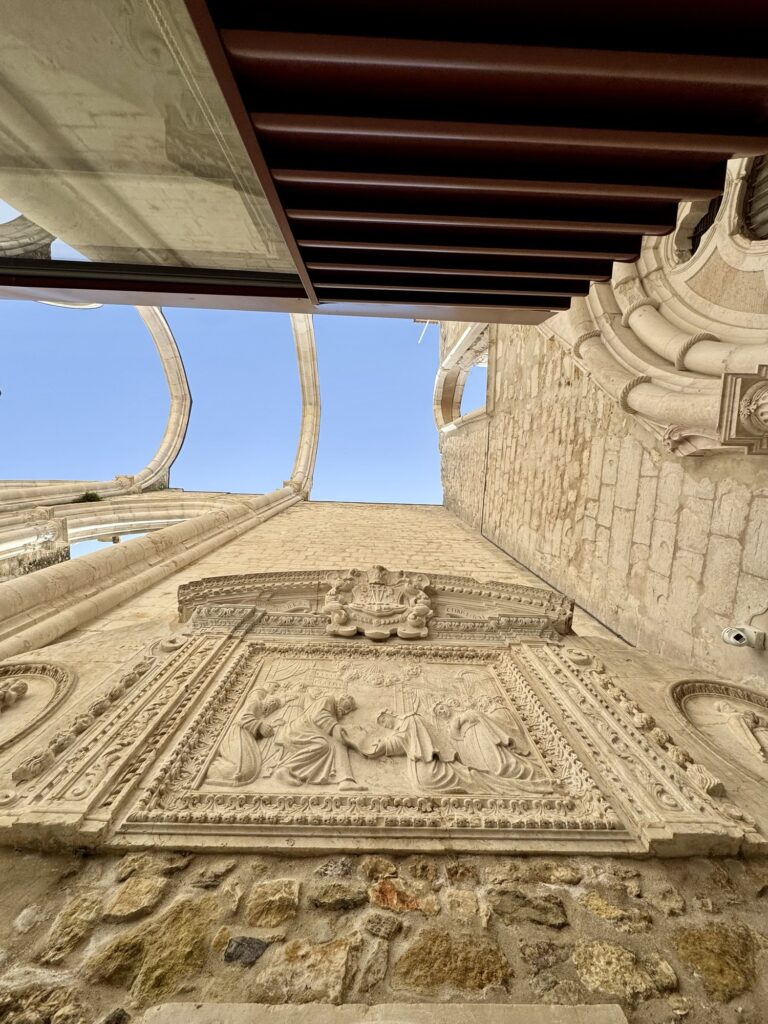
As you can see above, the roof is missing over most of the site. Many of the artifacts are not only outside, but embedded in the walls:
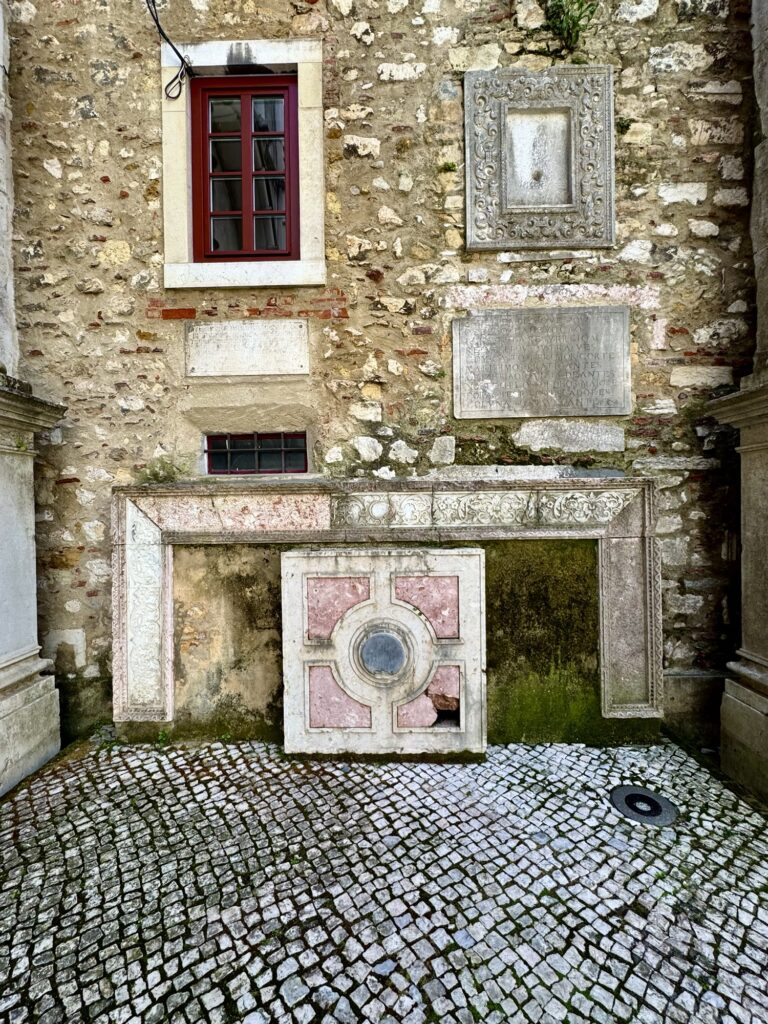
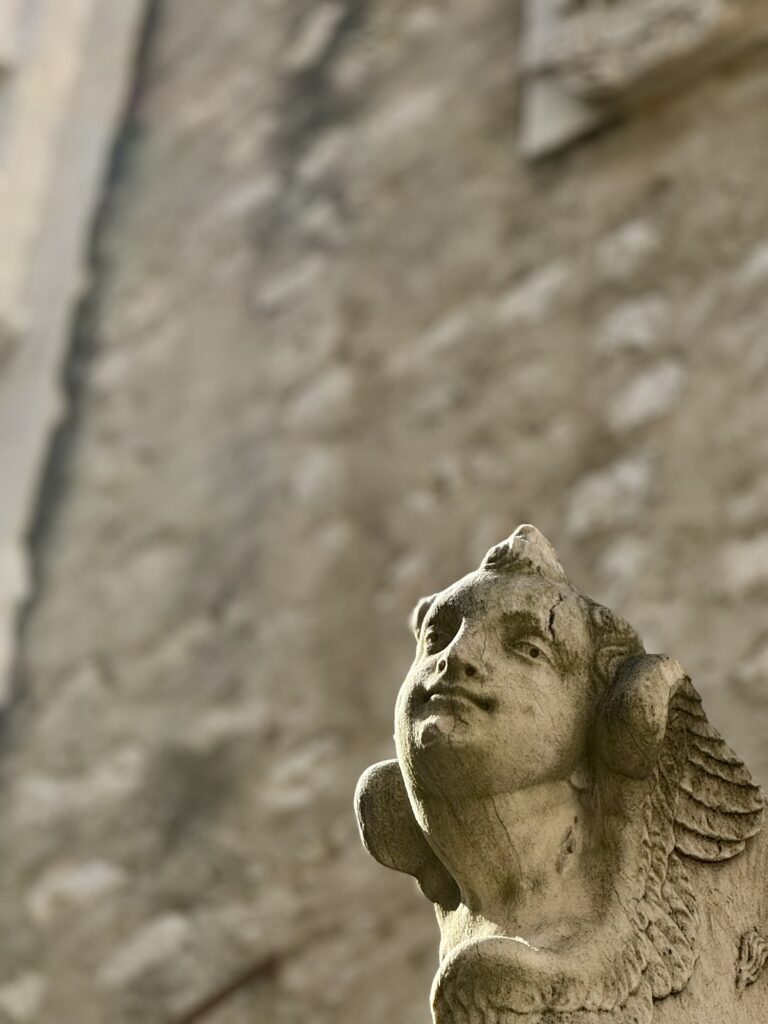
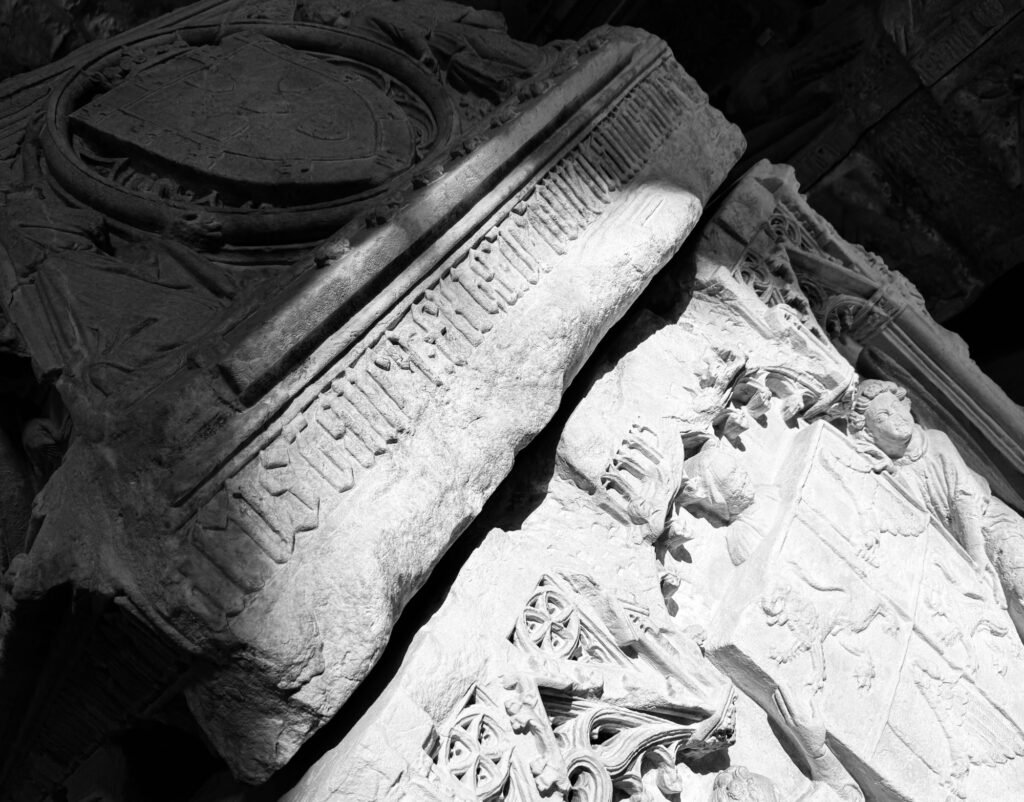
These stone bits and pieces, of inscriptions and sculptures and gravestones, don’t just come from the Carmo Convent. They are pieces of buildings and churches from far and wide.
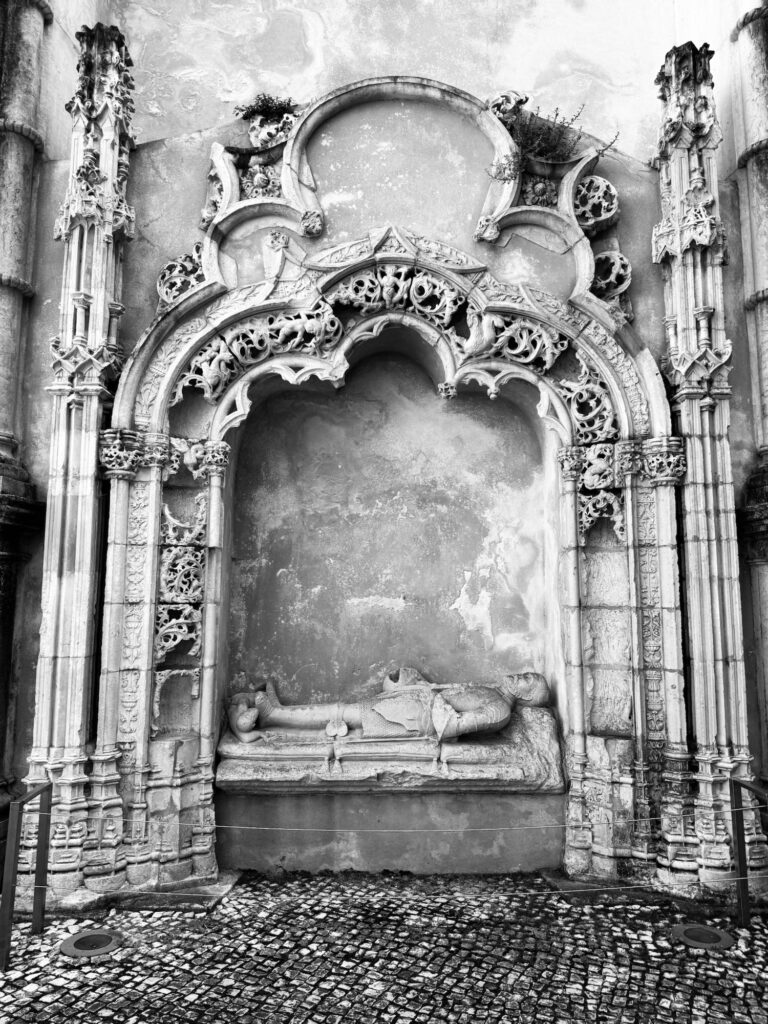
Every piece is thoroughly catalogued on placards in front of the walls. Other pieces of statuary stand by the walkway.
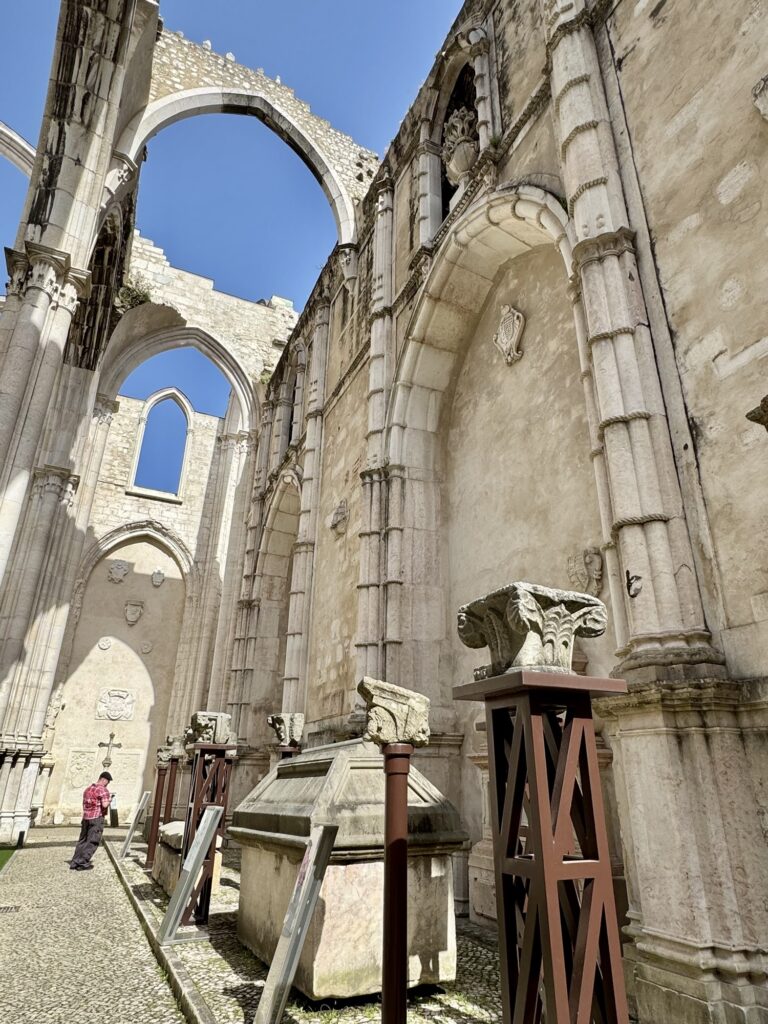
And you just walk by under the (hopefully clear) Lisbon sky, which you can admire through the skeleton of arches.
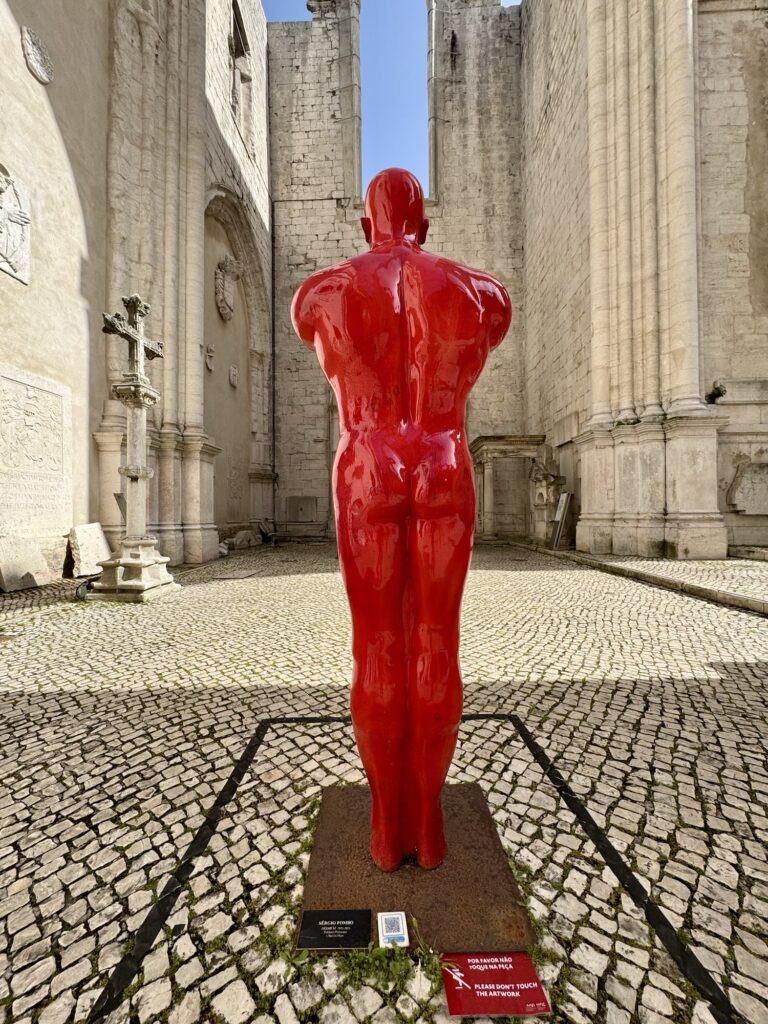
Interspersed with the archaeological collection are a few modern pieces, arranged along the central path through the roofless area. Their contrast is striking, though strangely not discordant.
The space is amazing, honestly. This ruin has been hodgepodged into something entirely new and filled with sunshine. Like I said, I’ve never seen any museum quite like it.
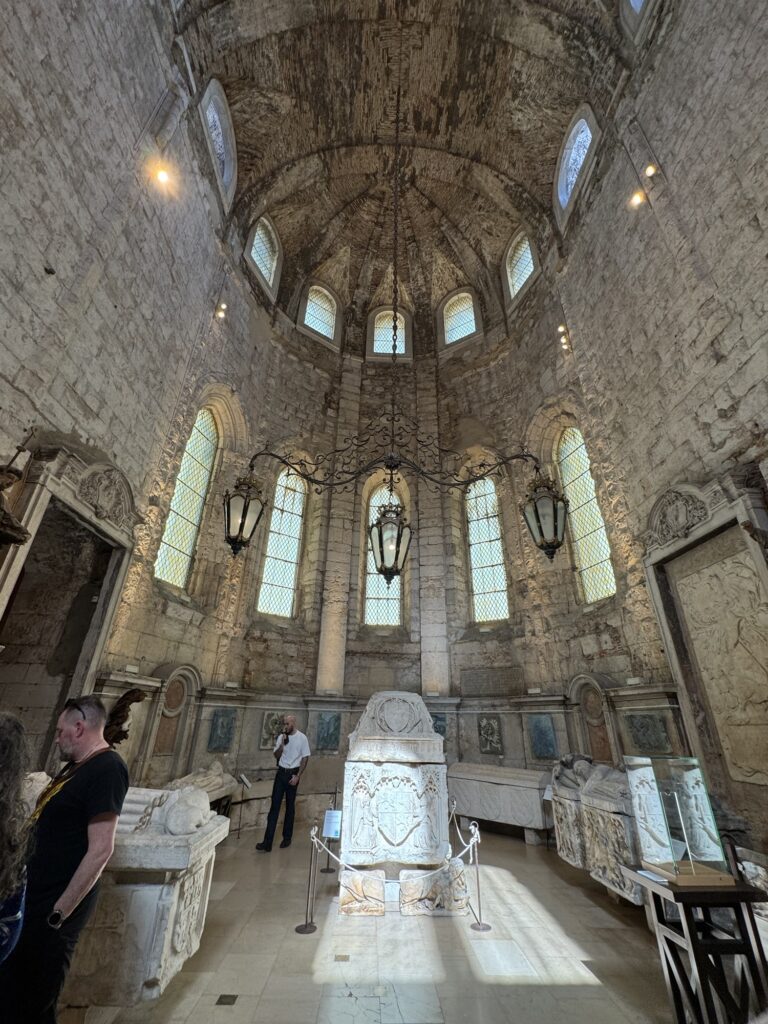
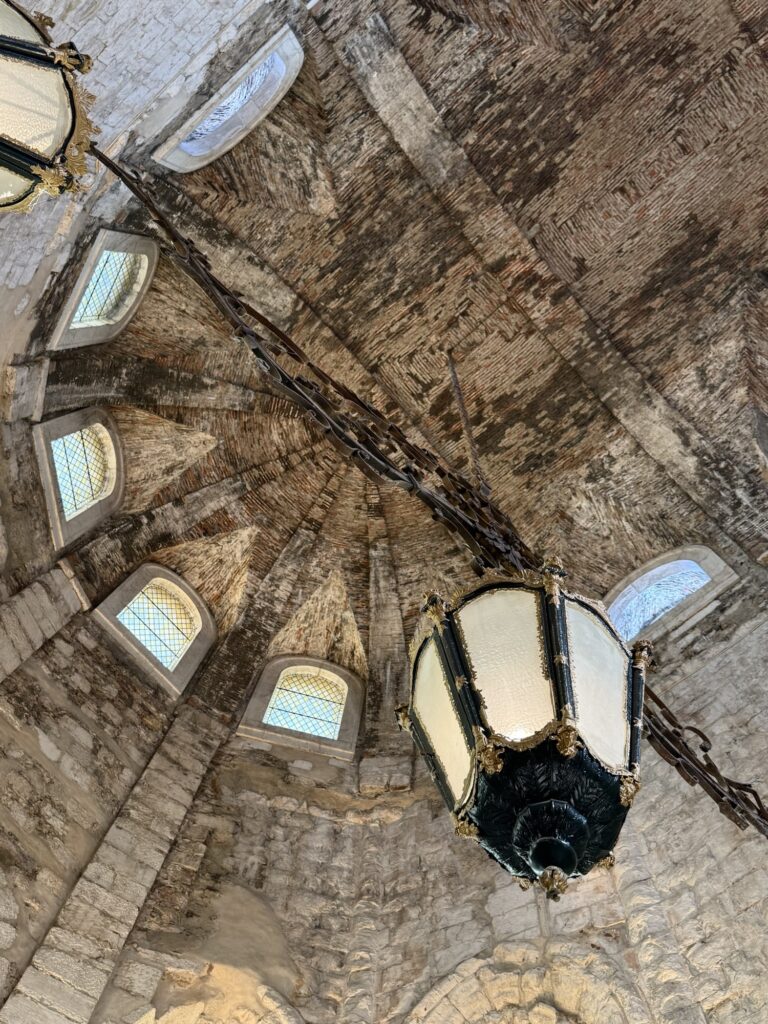
After going through the unroofed section, there are a few pieces of the building that still remain intact. They are similarly filled with a strange mix of items, housed under walls and ceilings that are deliberately left un-beautified.
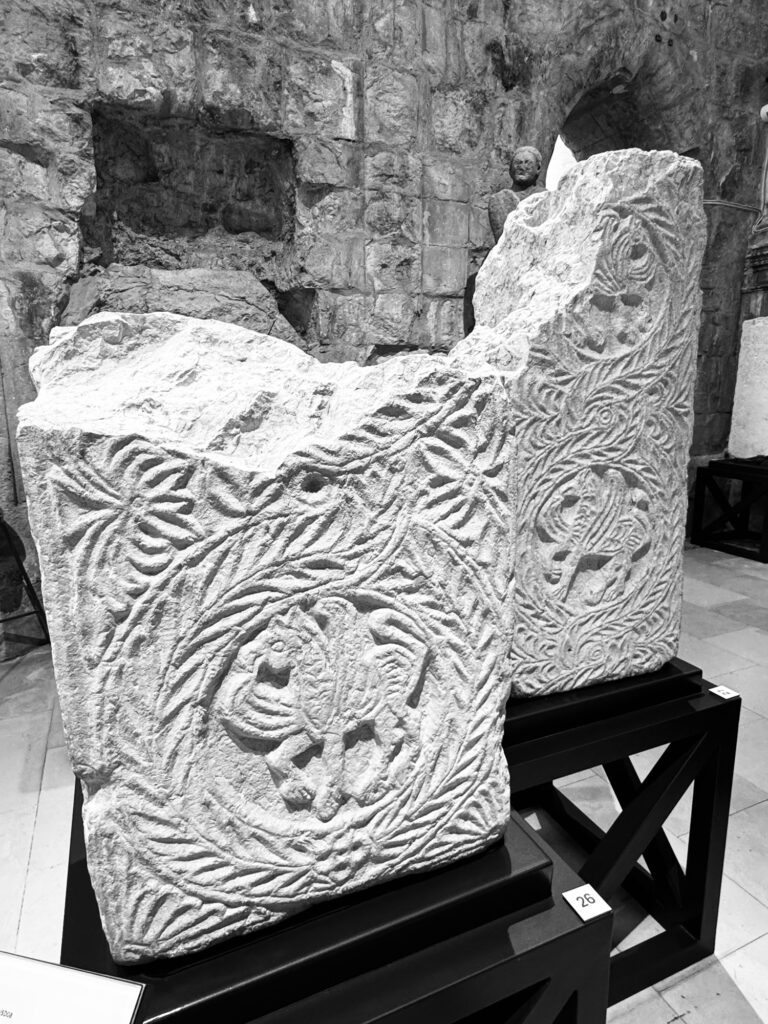
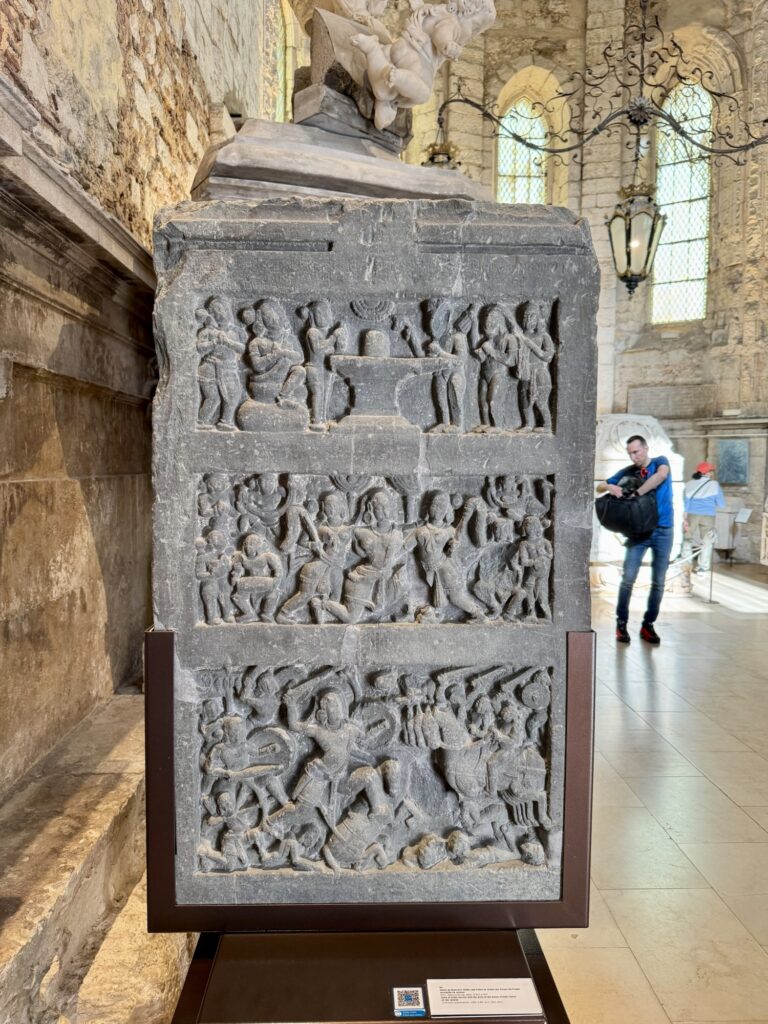
Up to this point, most of the pieces were Christian or at least European. (I did see one Jewish gravestone embedded in the outside wall.) But then I spied this item below, which is Hindu:
And other rooms contained an Egyptian mummy, neolithic stone tools, Mexican relics, an entire room of leatherbound archaeology reference books owned by the association that repurposed the site, and a worrisome pair of mummies of Peruvian children.
In one of the furthest rooms was a truly creative video display that projected floor-to-ceiling animations over the arches and embellishments of one of the walls. I was rather impressed.
But perhaps the best part is Carlota.
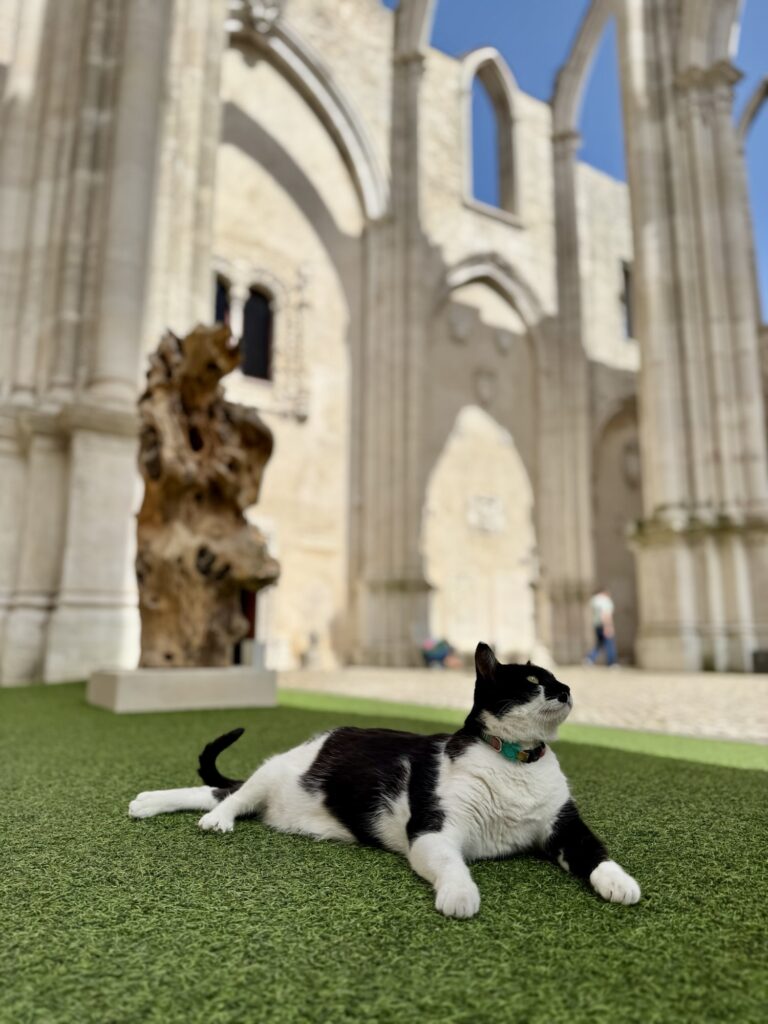
Carlota has adopted the museum as her home. She vaguely tolerates the presence of tourists in her vast living space. She cares not one whit about anything at all, unless you try to scratch her belly. (I watched a different tourist try to scratch the belly of the lounging Carlota, and it did not go well.)
Anyway, everyone loves Carlota.
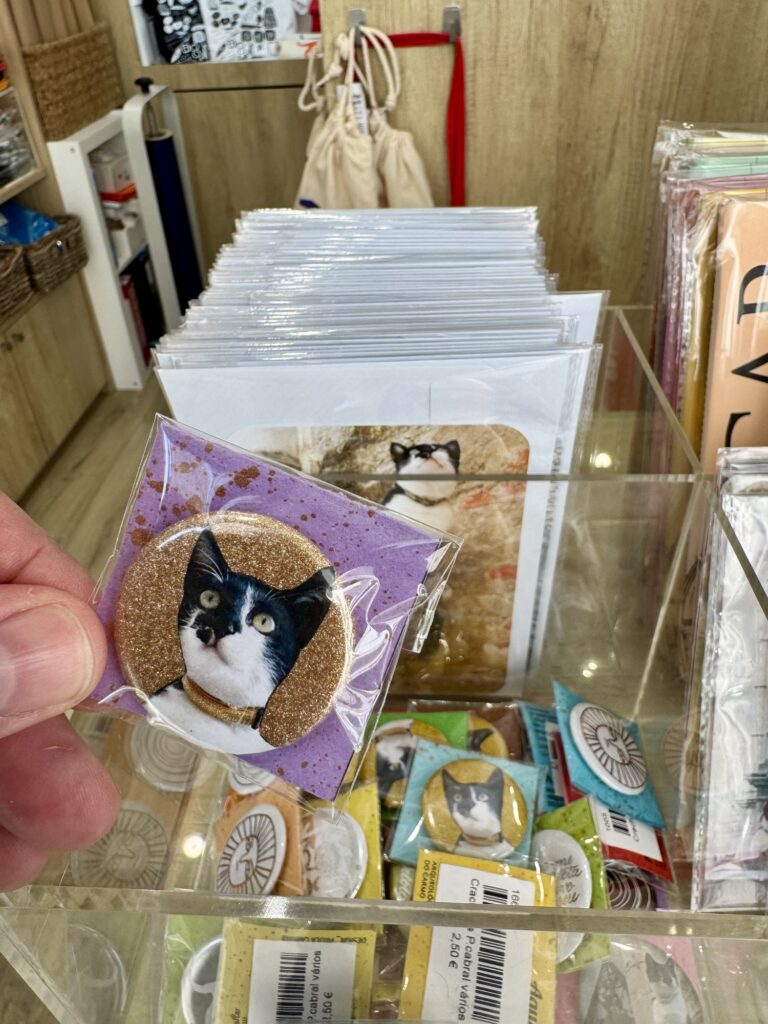
And can you buy Carlota souvenirs in the museum gift shop?
YOU SURE CAN!