
Back when I lived for a very, very short while in Spain, I was housed only a couple blocks from the grand cathedral of Toledo. 25 years ago, there was something I saw in the cathedral that I’d never seen before: a wooden table/box with lines of light bulbs on it. If you put a peseta coin into a slot on the box, one light would sputter to life and glow unsteadily. Or it might be two or three lights. The wiring on the things wasn’t great.
You are likely familiar with the ritual of lighting candles in churches as part of a prayer. These electrified light boxes were a way of getting rid of the mess and smoke of candles, which can be a problem in a historic building full of priceless historical relics and centuries-old wood. They were also a way to harvest your money, one peseta at a time.
Anyway, they were so janky that I was endlessly amused by the peseta lottery: how many lights could I turn on this time? I ran around the cathedral to all the different electric votive boxes, jamming the soon-to-be-obsolete peseta coins into the slots.
I’ve long wondered if those electric boxes are still a thing, because I don’t go to churches unless I’m being a history nerd in Europe.
The answer?
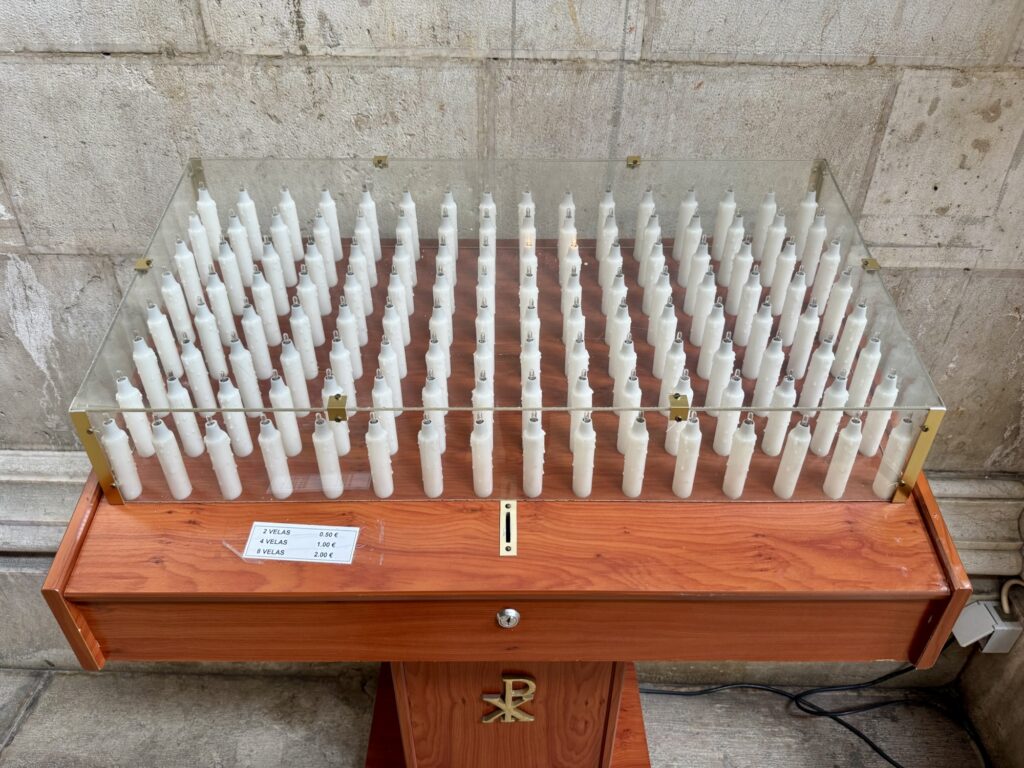
YES!
They have even upgraded in many ways, not just in how much each fake candle costs.
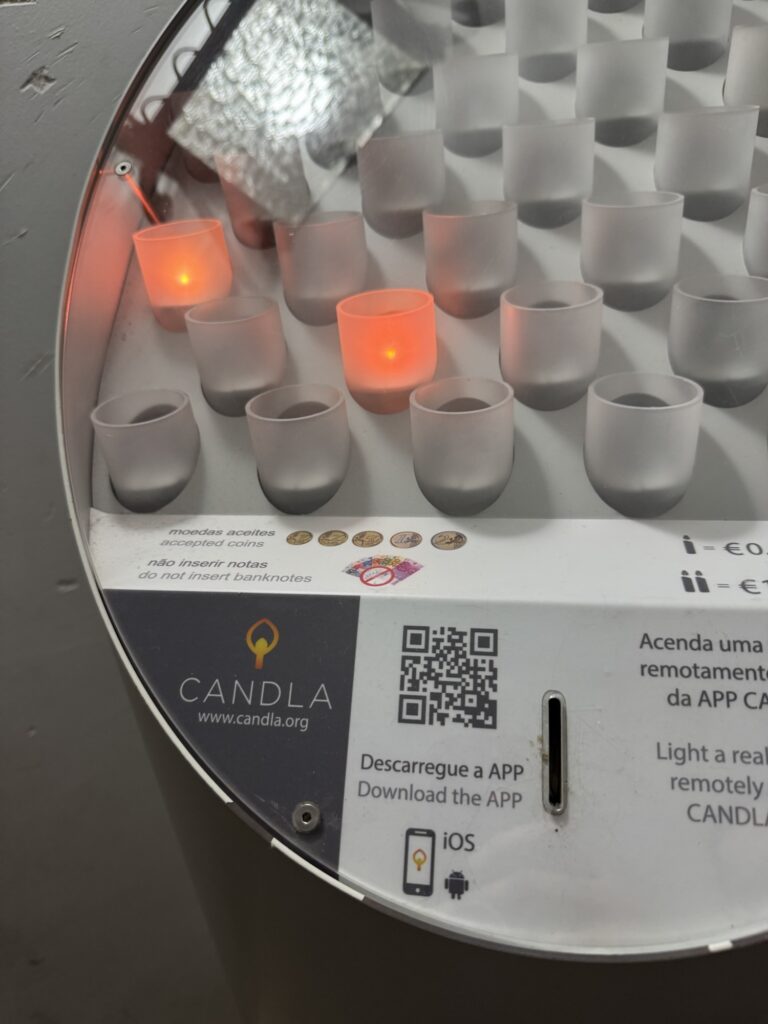
If you don’t have coins, THERE’S A QR CODE.
AND AN APP.
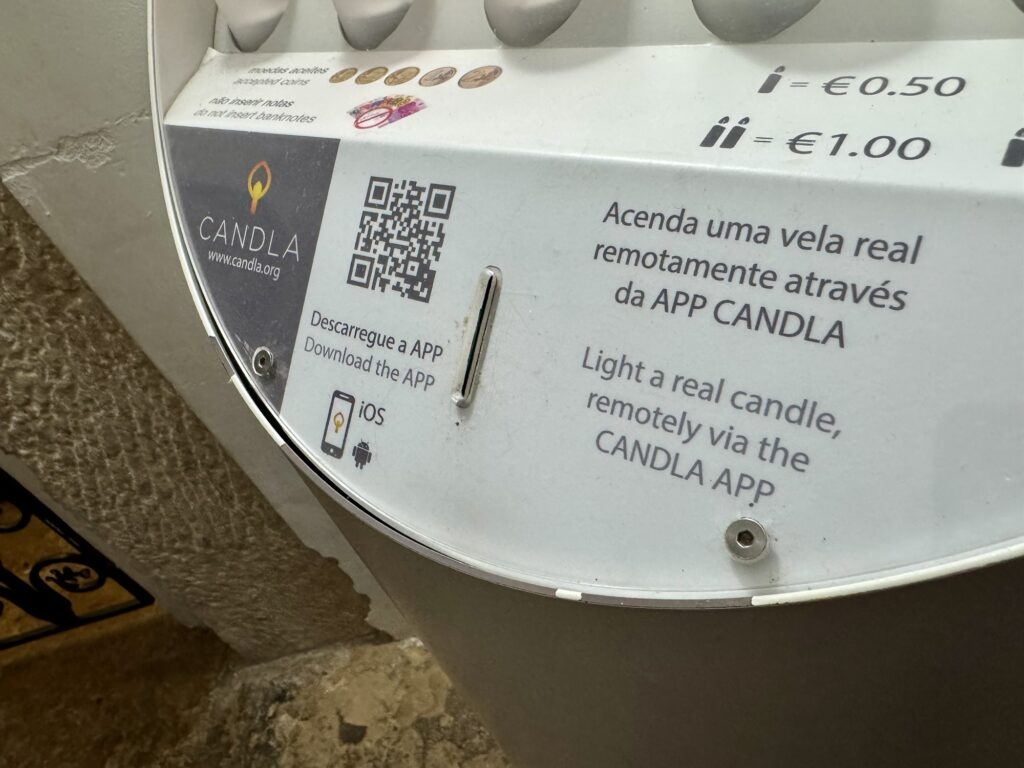
YOU CAN EVEN LIGHT CANDLES REMOTELY.
I could go home and turn on an LED for a few minutes in a cathedral basement in Lisbon ANY TIME I WANT.
After that, regular candles seem so ordinary.
But what if — WHAT IF — the candlemakers upped their game in conventional candle technology? What if we had… A CANDLE BURNING SYSTEM?