
We were thus far today stymied in finding Roman ruins to oggle, so our next visit needed to be surefire: a museum featuring an excavated Roman amphitheater.
Once we climbed up enough hills to reach the place, I was pleasantly surprised that you can just walk into the main dig site from the street, with no tickets needed to enter the elevated, restricted path over the ruins. It’s a very good site, too, showing the steps, the foundations of the stage, exits and entrances, and the Roman road leading up to the theater.
Did I take any photos of it? APPARENTLY NOT.
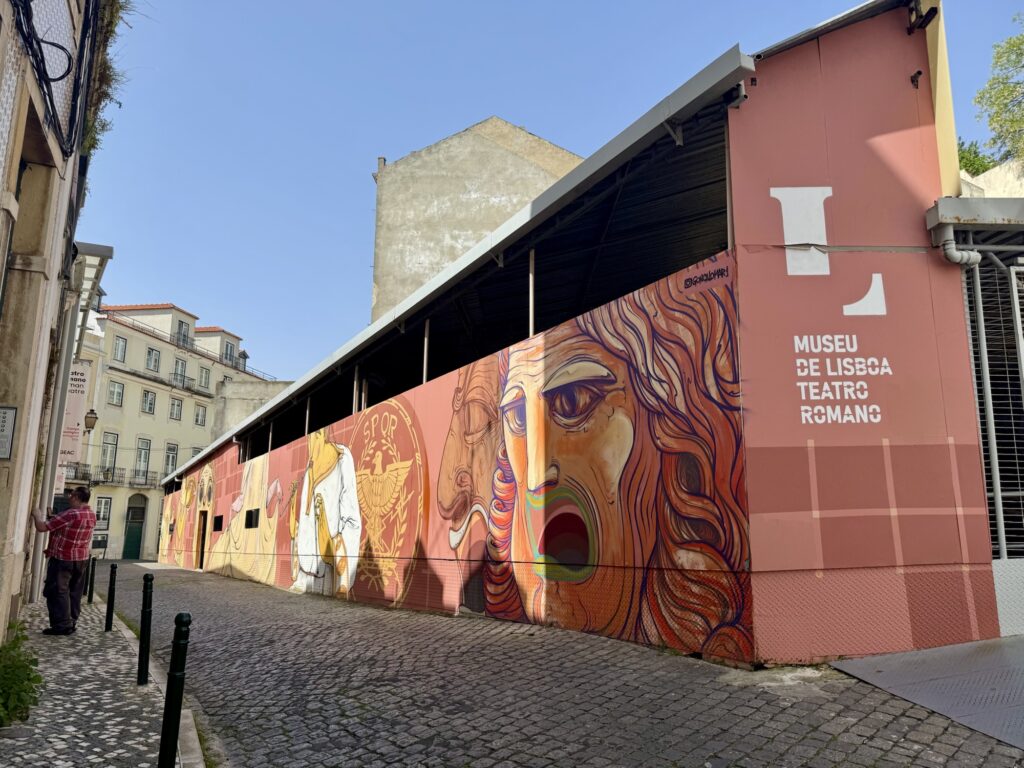
Anyway, here’s the exterior of the building, in case you are in Lisbon and want to oggle Roman stuff for free:
Across the street from the dig is an absolutely exquisite museum about the site, which includes further reaches of the dig and many of the bits and bobs found within the dig. The entrance fee is inexpensive and worth every history nerd’s penny.
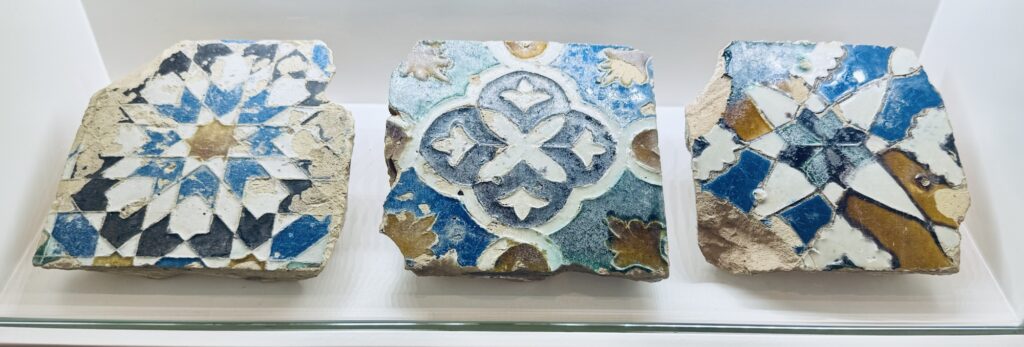
Above you can see examples of a particular style of tile called aresta, which comes from Portugal and is something I’d never seen in person before. If you touch one of these tiles, you will find that there are raised edges to the barriers between colors. The tiles are stamped to make these raised edges, and then glaze is pooled in the depressions before firing. There is a glass-like luminescence to the the resulting colors.
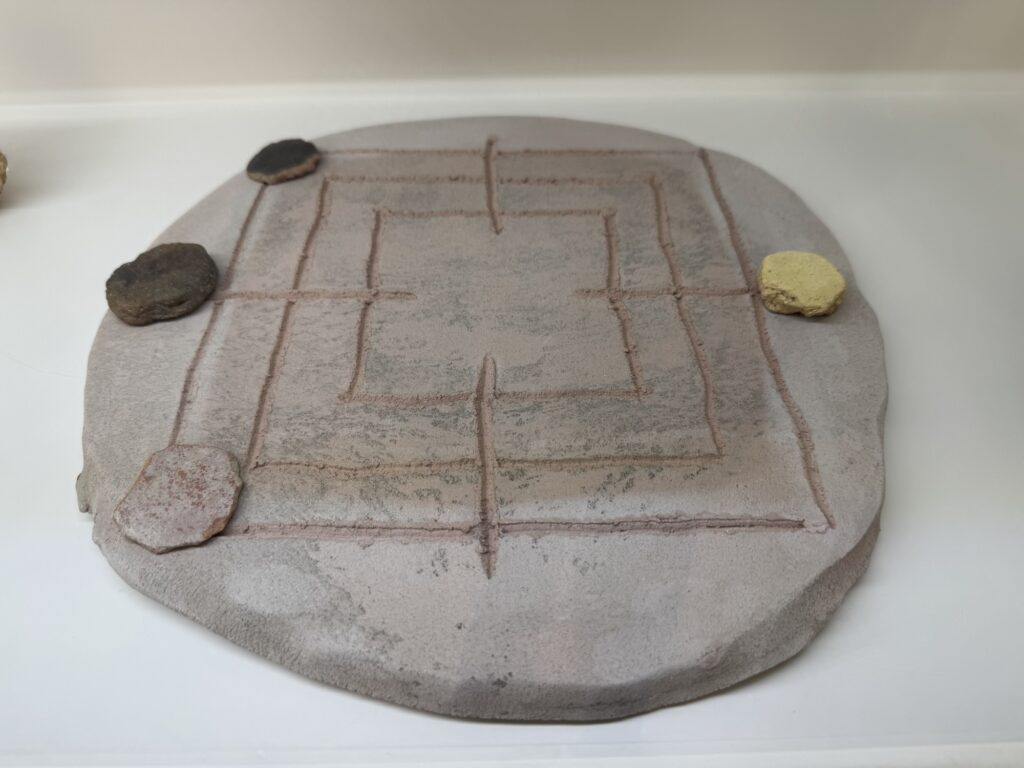
Romans were gamers, and this archaeological site yielded game pieces for Nine Men’s Morris, which may predate even the Romans. You can find the rules here.
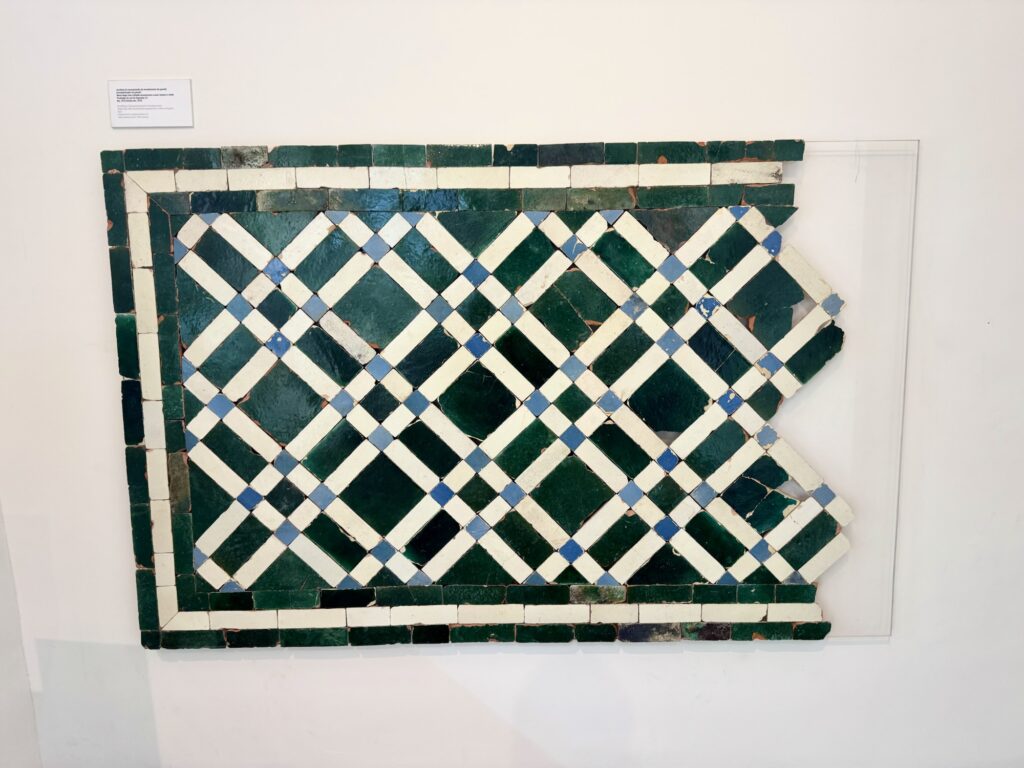
No respectable museum with a Roman collection is complete without a partial mosaic.
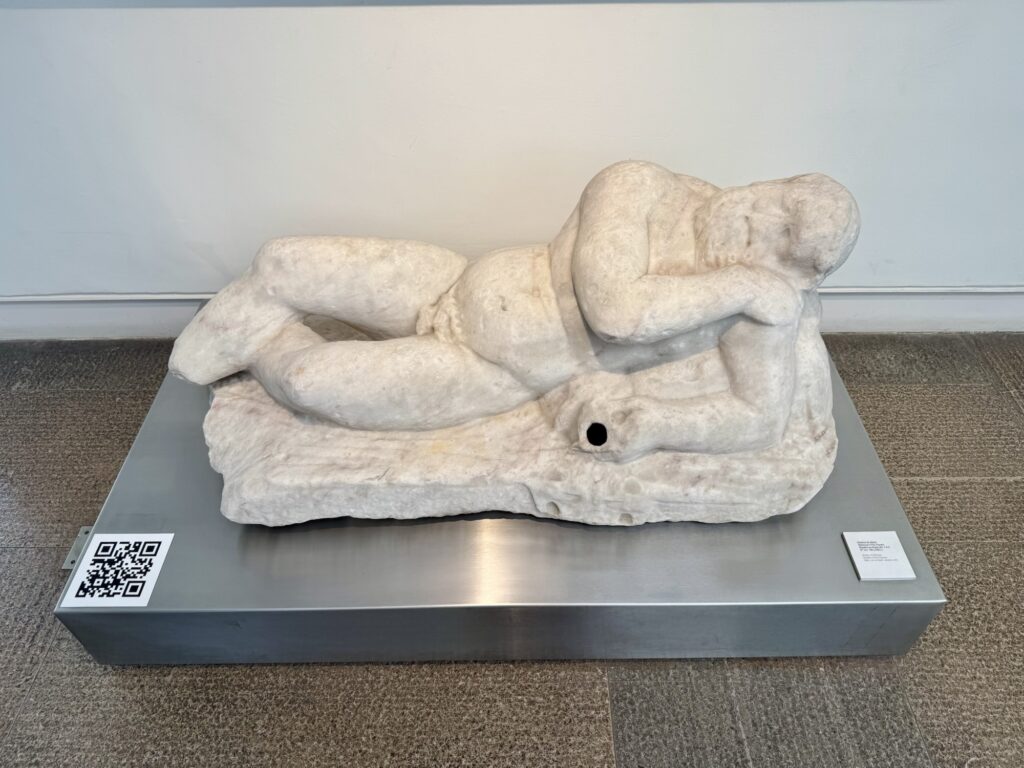
Above is one of the star pieces of the museum’s collection, one of several statues of drunken Silenus that once topped the walls of a promenade. I couldn’t find information about the giant hole by his hand, but it leads to a large empty space in the statue. Fes guessed it might be for a flagpole, but it occurs to me that it might be a fountain, as Silenus was often depicted with a wine skein in his hand.
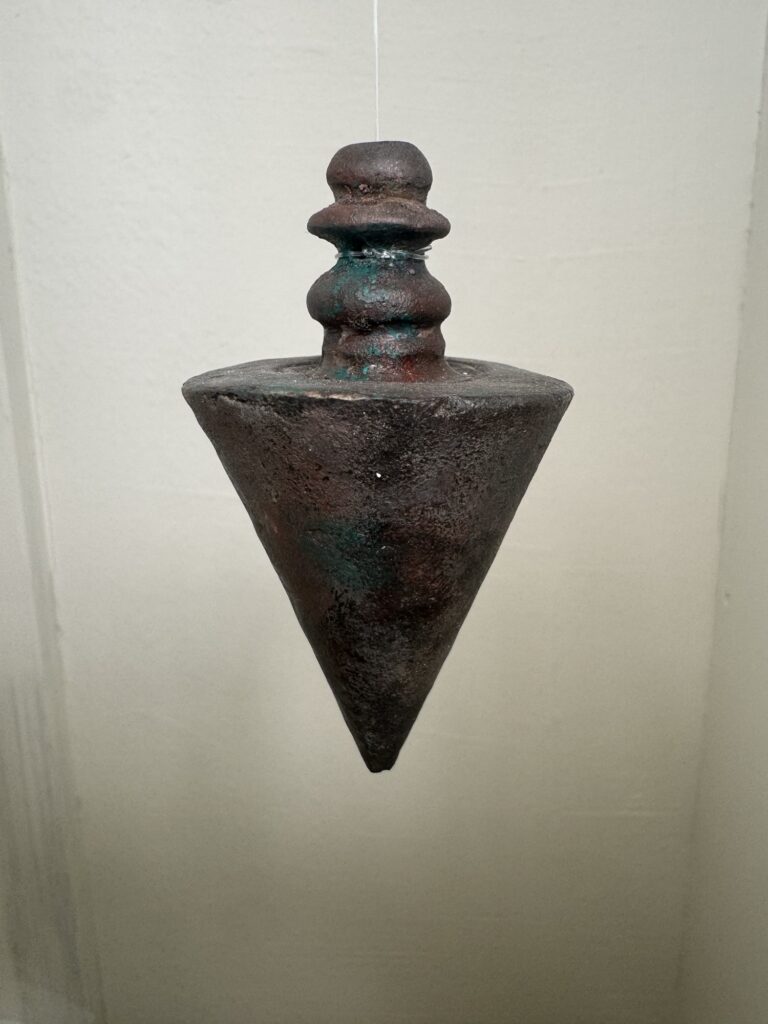
Okay, story hour. About 25 years ago, I lived for a very short while in central Spain, where I worked as a student on a couple archaeological sites. Since I was skilled at illustration, I became the go-to student for drawing maps of the sites. Included in the skills I gained during this work was the ability to use a transit, which means I got to know the ways of the humble plumb bob. I quickly learned that plumb bobs are invaluable and even kind of nifty.
In fact, all of the students working on the sites became enamored of plumb bobs. We all wanted our own shiny, satisfying plumb bob. We each vowed to own one as soon as we could.
Above is a Roman plumb bob, and very little has changed about plumb bobs since. I attest that it is indeed a very fine plumb bob.
Anyway, let’s switch gears and talk about museum design.
Another thing I did in college was work as a person who designed how best to display art in a small art museum. I’d figure out and mount the best lighting, I’d paint the wall, I’d figure out the best configuration for the art around the room. There is an art to not only displaying museum pieces in a fetching way, but also to displaying them in a way that most clearly conveys meaning to the viewer.
This particular museum is one of the best I’ve seen in terms of design and presentation.
For example, look at this:
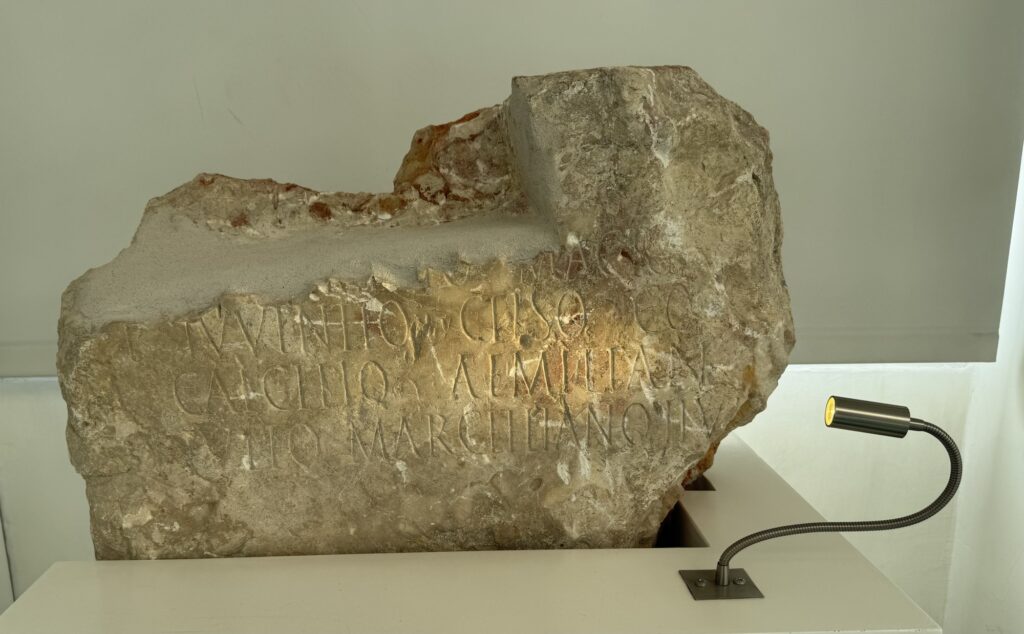
If you’ve seen enough ancient inscriptions carved on stone, you’ll know that many of them are very hard to read. That is partly because many museum spaces have lighting that is bright and uniform, but doesn’t leave enough shadows for the text to stand out. But in the photo above, you’ll see a very simple solution for this: a side light. This makes the engravings fall into shadow, and the text pops into view. So simple!
The museum also had many ways to show how the 3D space of the ruins related to what was there before. There were shadow boxes with rotating video reconstructions of the building. There were well-placed pieces of art that showed what might be seen through a door or a window. There was a vertical display of the layers of ash and rubble that had been deposited over the site during the Lisbon earthquate of 1755. There was even a doll house:
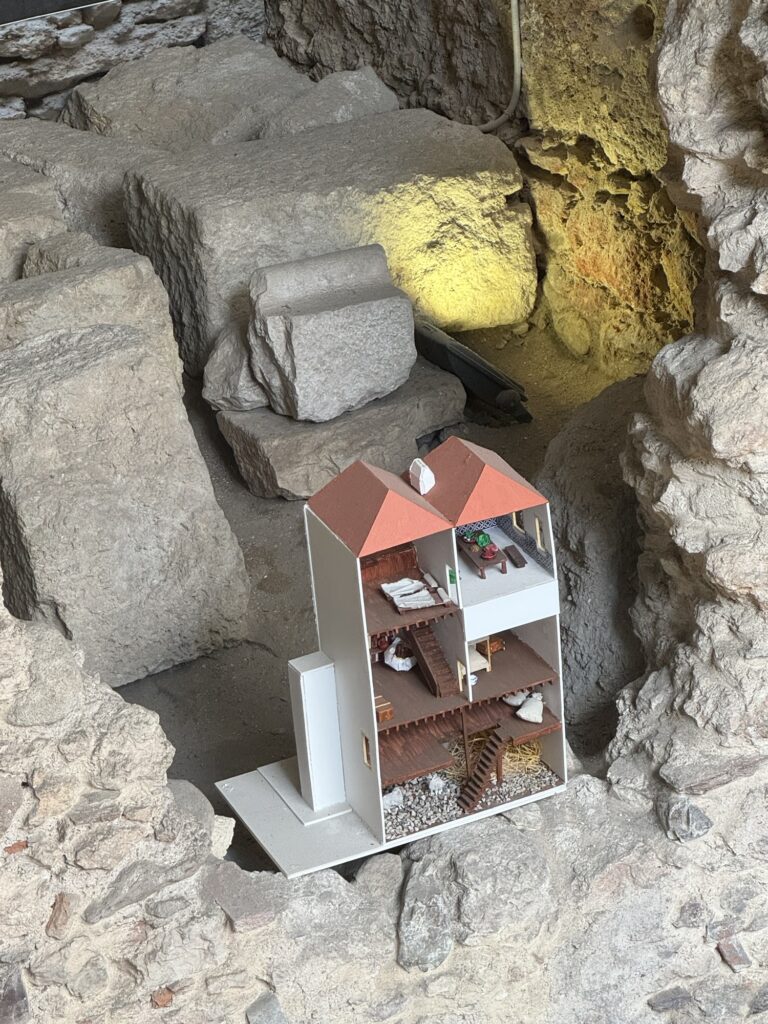
Do I want to own a Roman doll house now? Yes, of course!
On an even simpler level, check out how the museum shows the overall shape of this vessel, where only a few pieces remain:
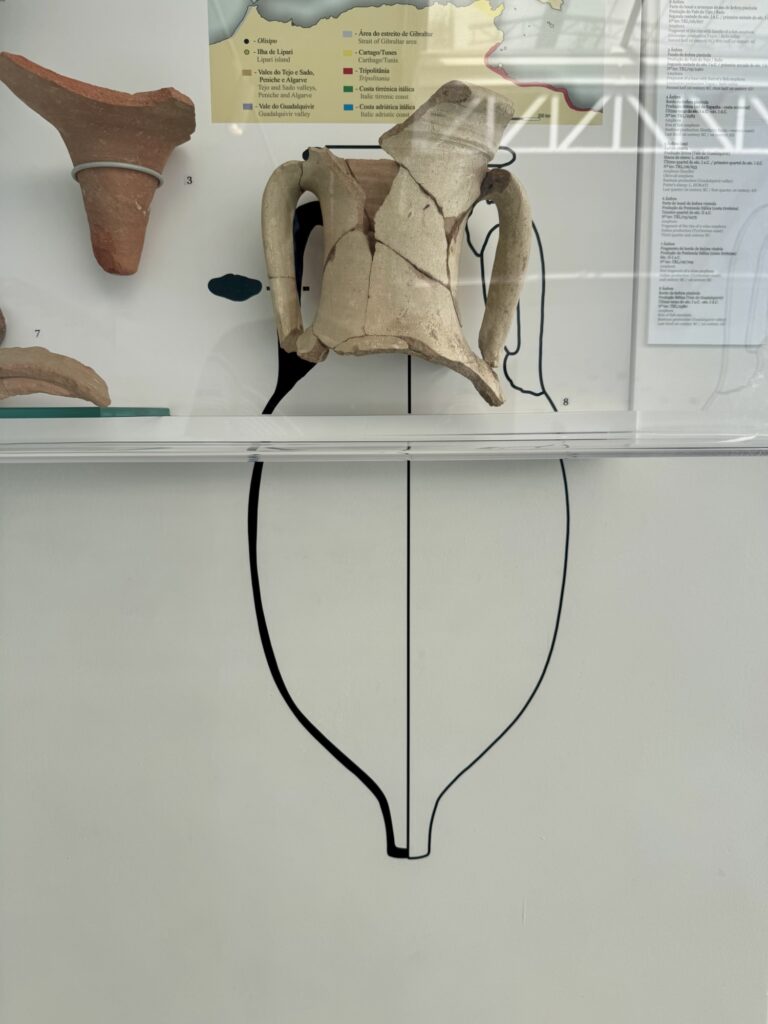
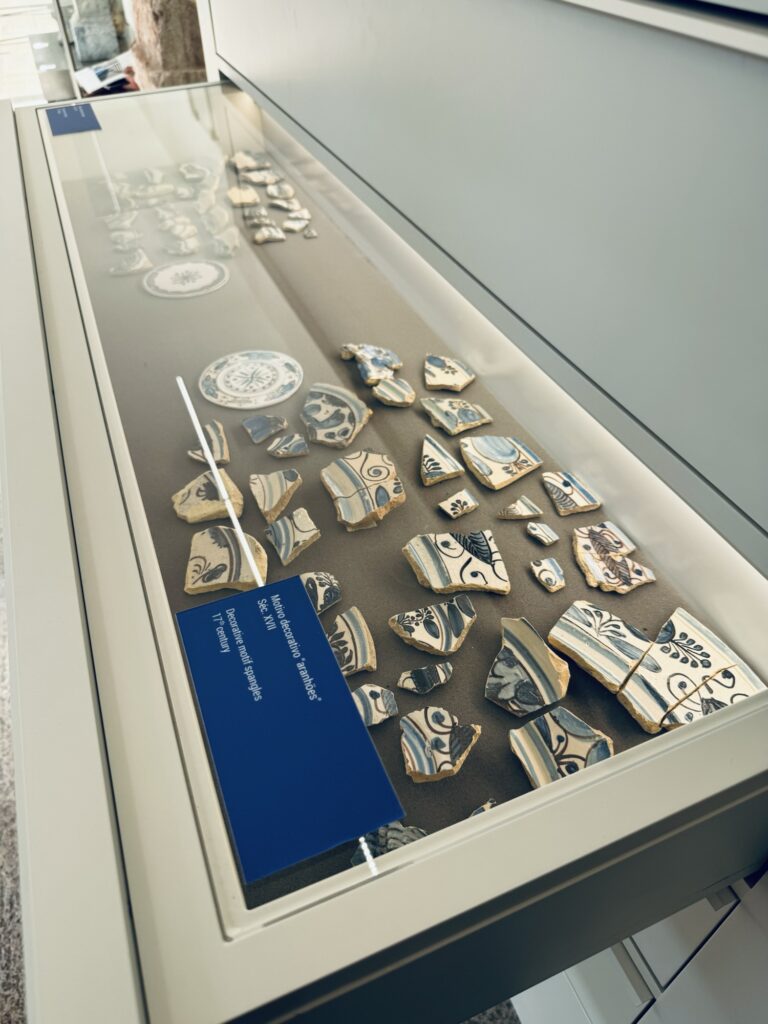
And finally, here’s a great way to display a whole bunch of pottery shards when you don’t want to dominate a whole gallery with them:
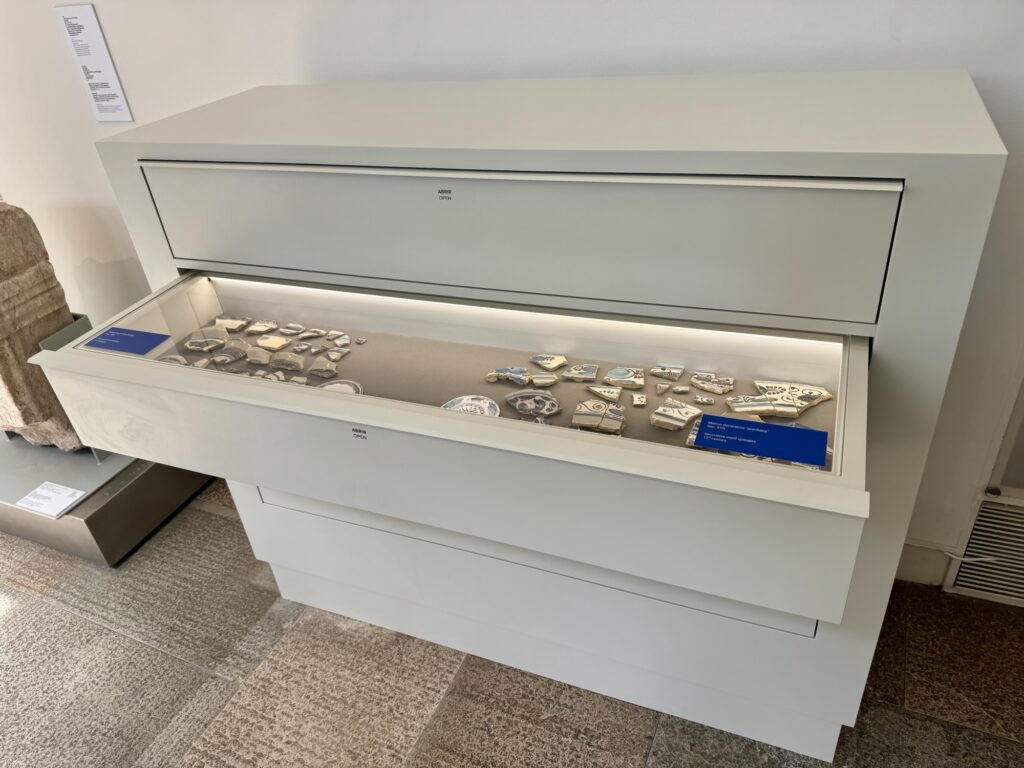
As you slide out a drawer, the display light comes on. It was also a great way to interact with the objects: not only was it easy to get a close look at the pieces, but also there is something to actually touching and moving the display that engages the brain beyond just looking.
And finally, it helps to have a sly sense of humor. The door to the left is the restroom. On the right is a display about communal Roman toilet practices.
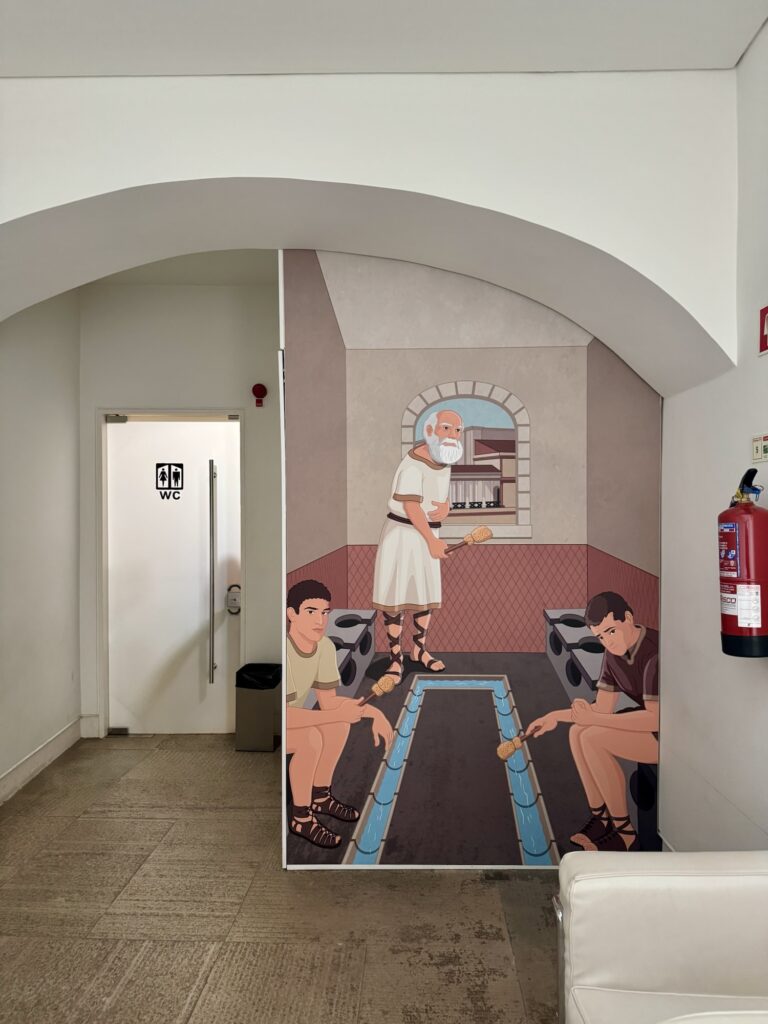
The bathroom did not contain any sponge sticks.
Yes, we checked.