
The Lisbon Cathedral is the oldest church in the city and is a National Monument. It has survived earthquakes, a slew of different governments, and tourism. The year of its birth, 1147, was the year that the Christians seized control of Lisbon from the Moors during the Second Crusade. It was built upon the site of an important mosque, which itself had been built upon Roman foundations. The building is a mix of various styles dating from the Romanesque to Gothic to Baroque to Rococo. Did I want to explore inside? YES.
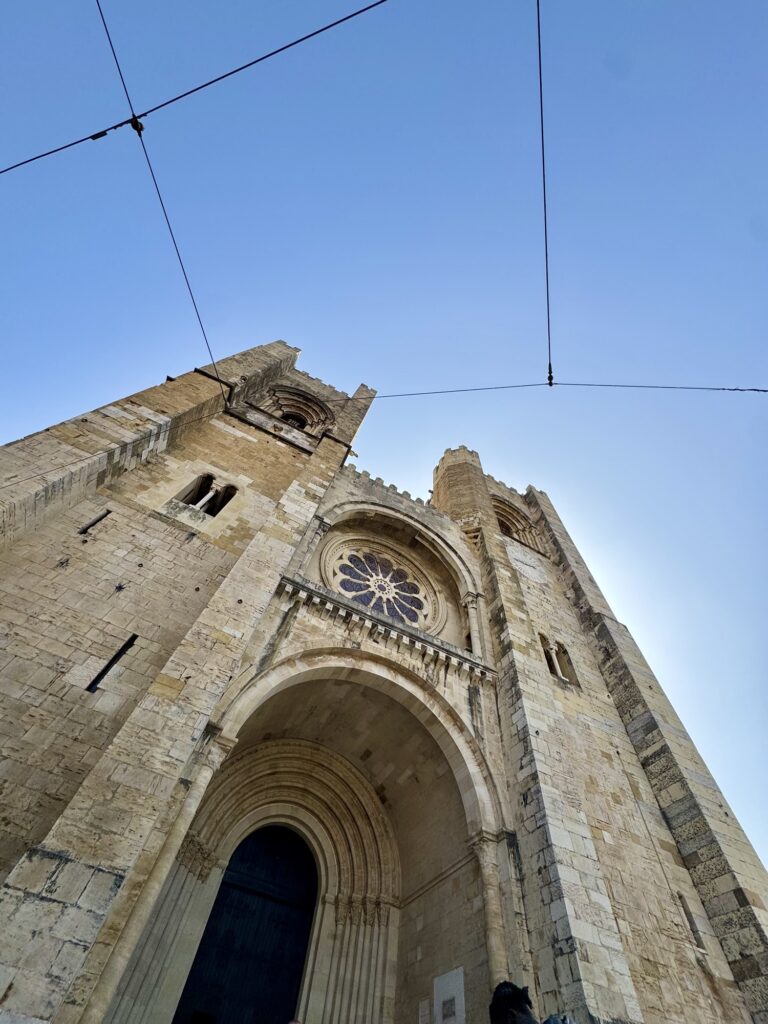
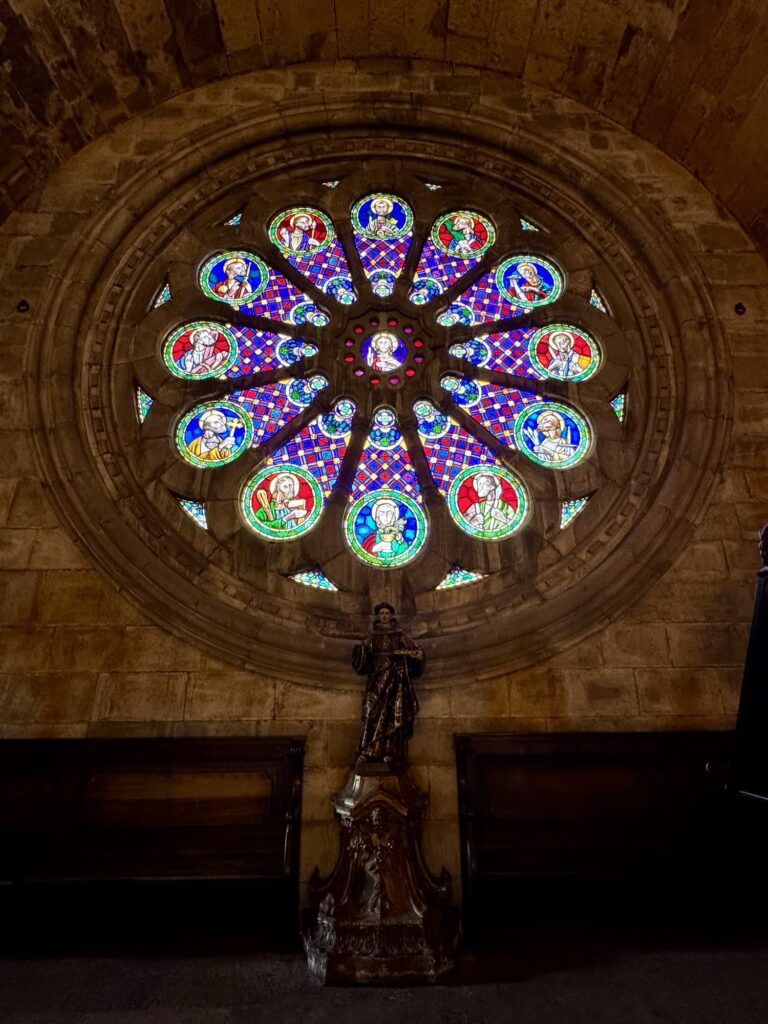
As you can tell from the exterior, there is a rose window. Who doesn’t love a Gothic rose window? The first thing you do after you buy your admission ticket is run up the stairs to see it.
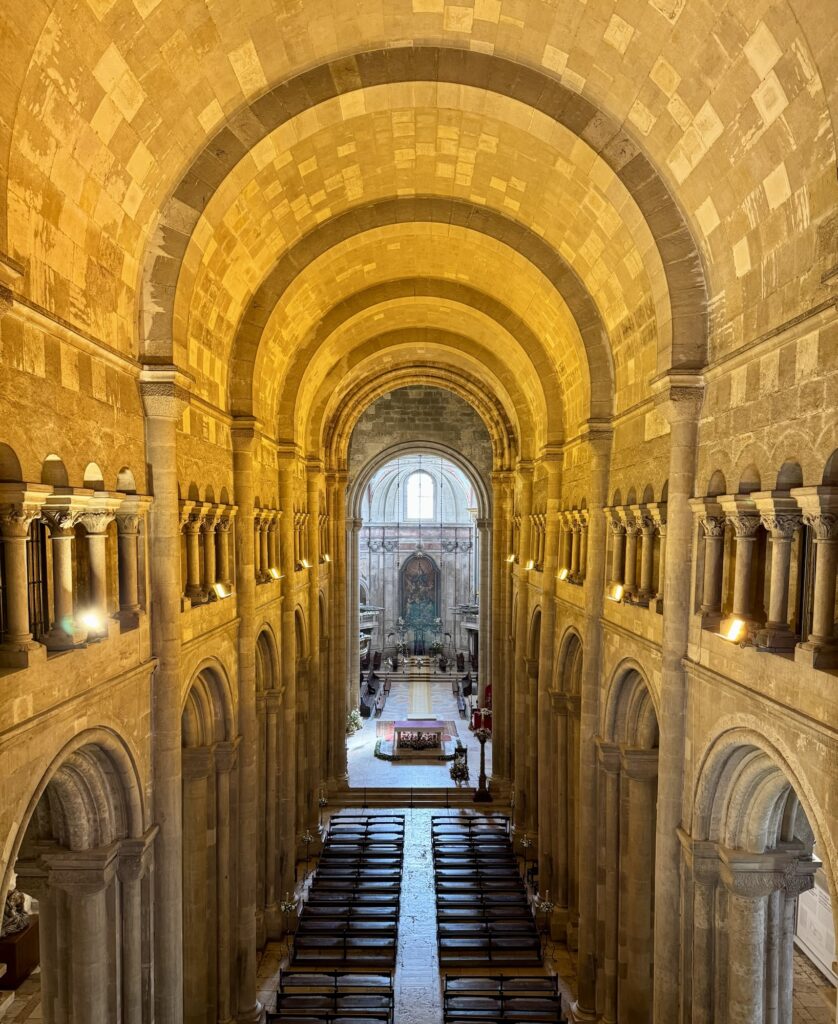
If you turn 180 degrees from there, you get to see a grand view through the main hall of the church.
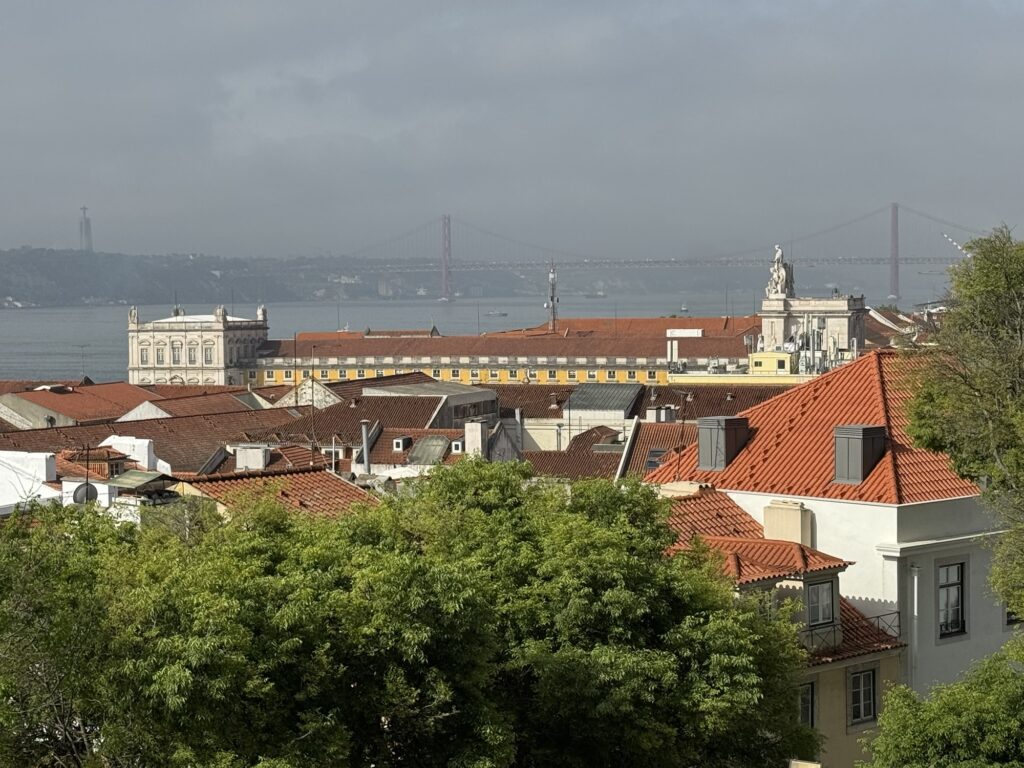
And if you find the narrow gap that goes behind the rose window, you get a nice overlook of the Tagus river. Beware of what time it is, though, because the bells are right there and they do ring every hour.
In the upper floors of the church is a stunning collection of centuries of reliquaries, monstrances, raiments, and devotional art of all types. The city of Lisbon has been a bishopric for centuries, so the collection of stuff is a walk through the history of artisanship, from the creation of rich fabrics to delicate tooling of metal.
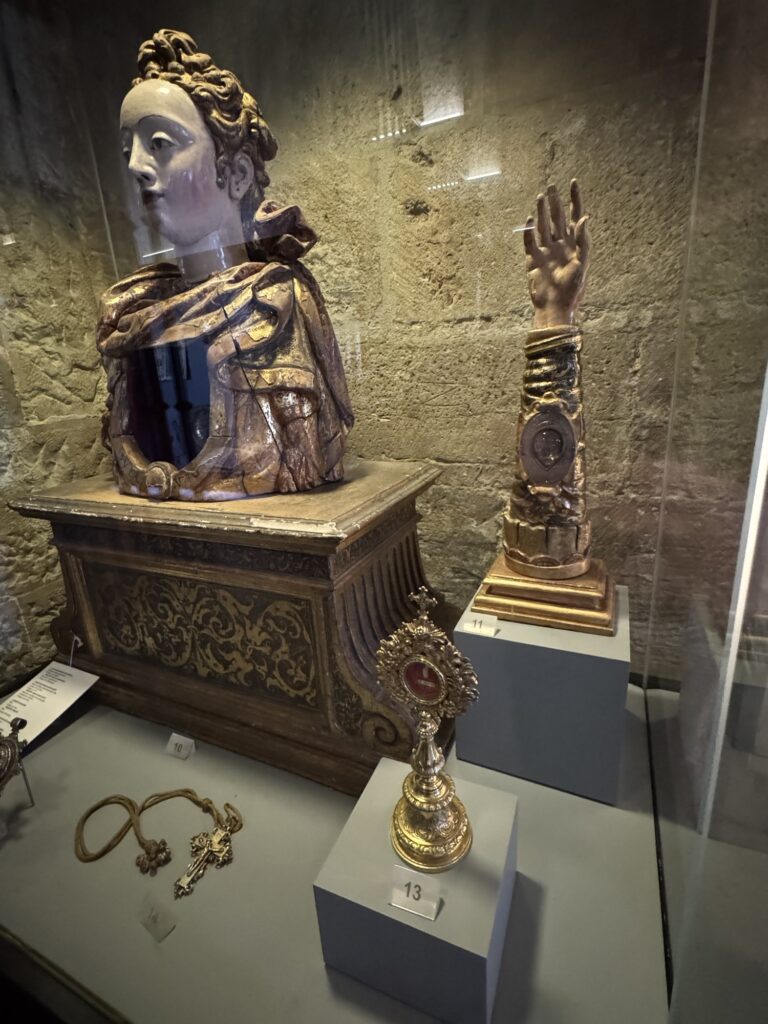
Now, I am not, nor have I ever been, a religious person. However, I will always visit historical holy sites because they often have huge collections of well-preserved art. We can talk another time about the church retaining vast wealth through the centuries and other abuses, but there is no denying the skill that went into making these devotional relics.
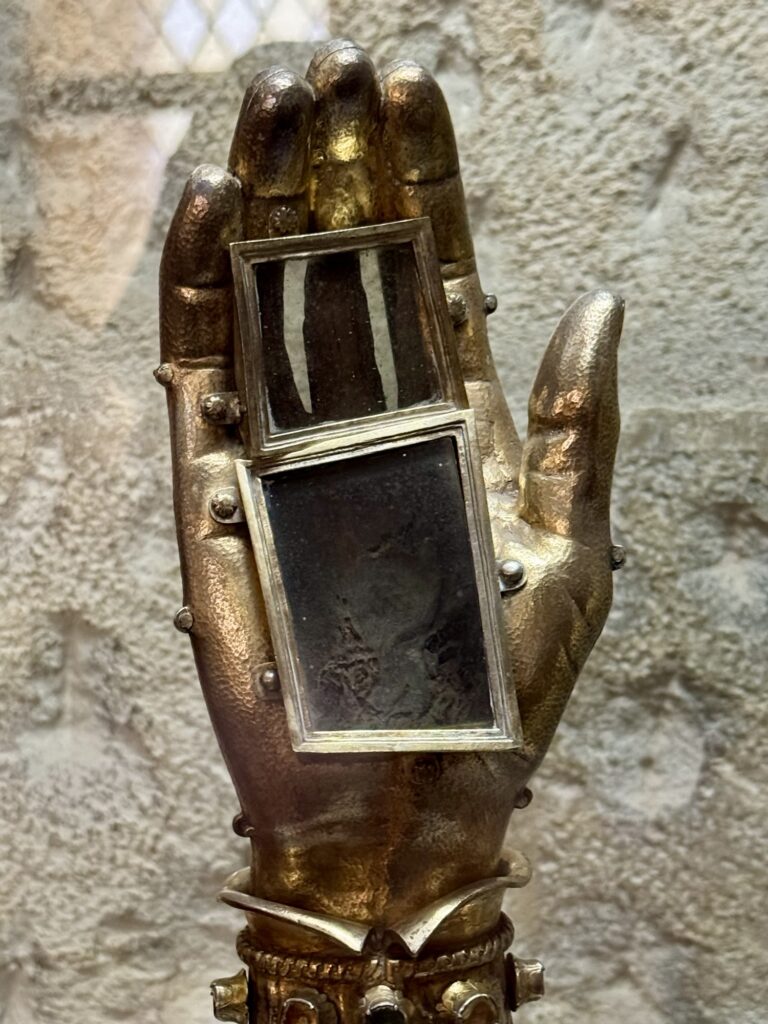
Still, I was not even raised with a religion, so a lot of this stuff kind of baffles me. Like this thing. I wondered, huh, that’s an odd thing. A big gold hand, some glass… is it part of a larger statue? What purpose does it…
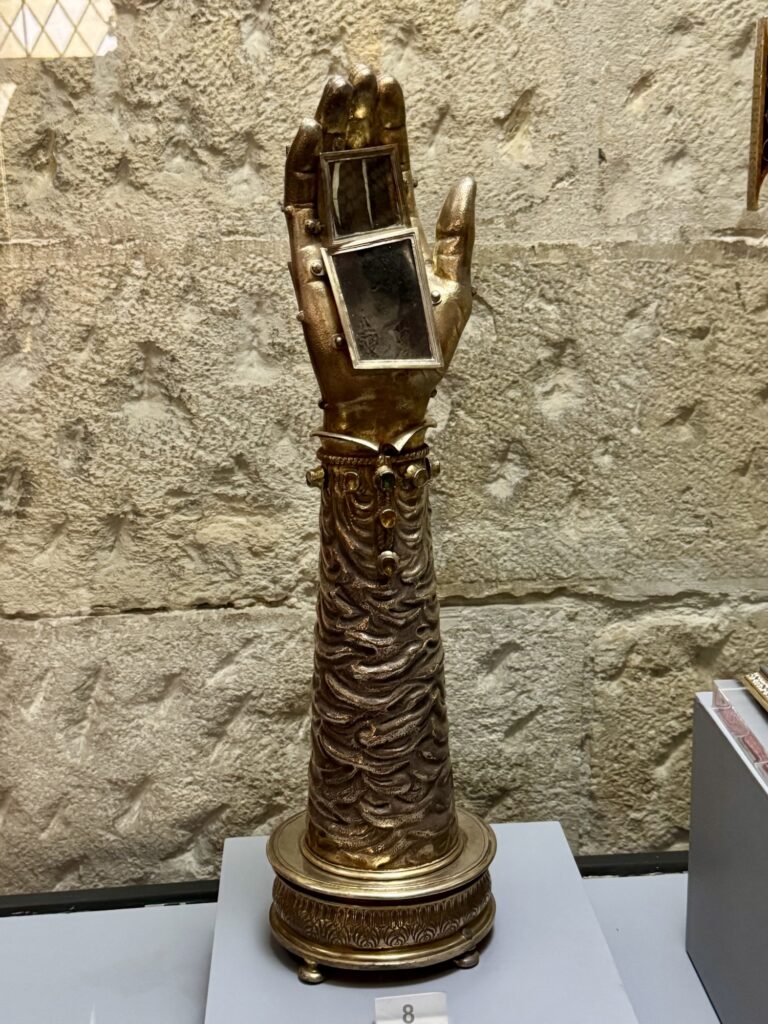
…OH MY STARS, THERE IS AN ACTUAL HUMAN HAND IN THERE.
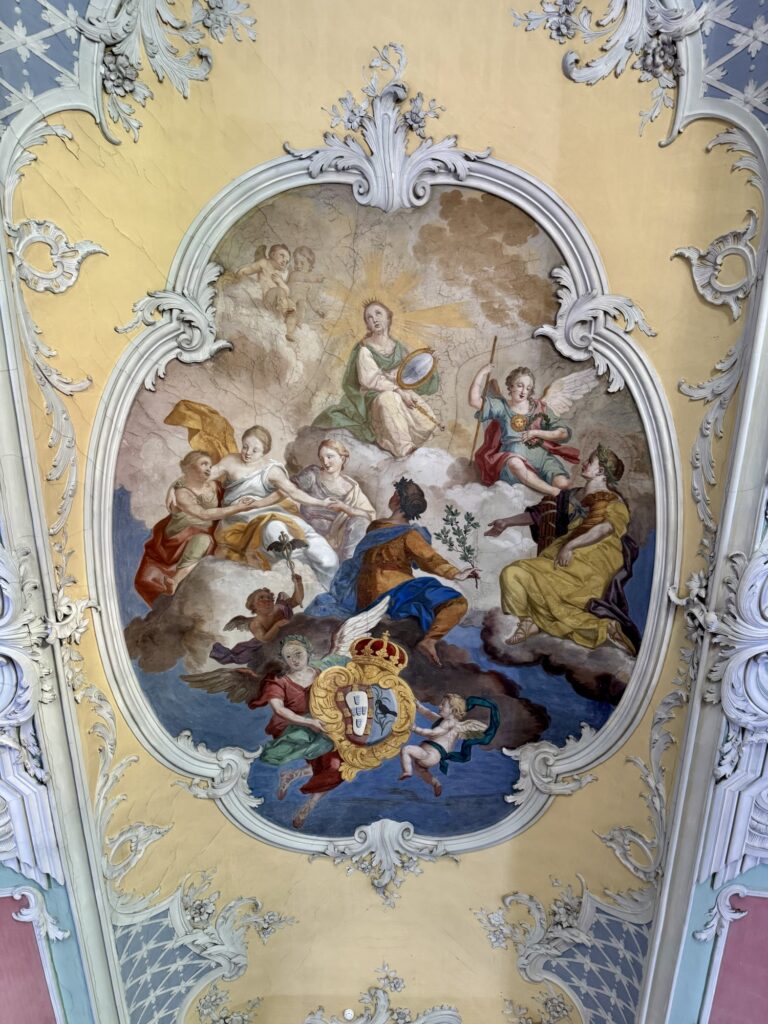
Anyway, the rooms themselves were pieces of art as well. Walls were covered in murals, elaborate paintings on tile, and architectural details galore. As you can see in the room below, this doesn’t look very Gothic.
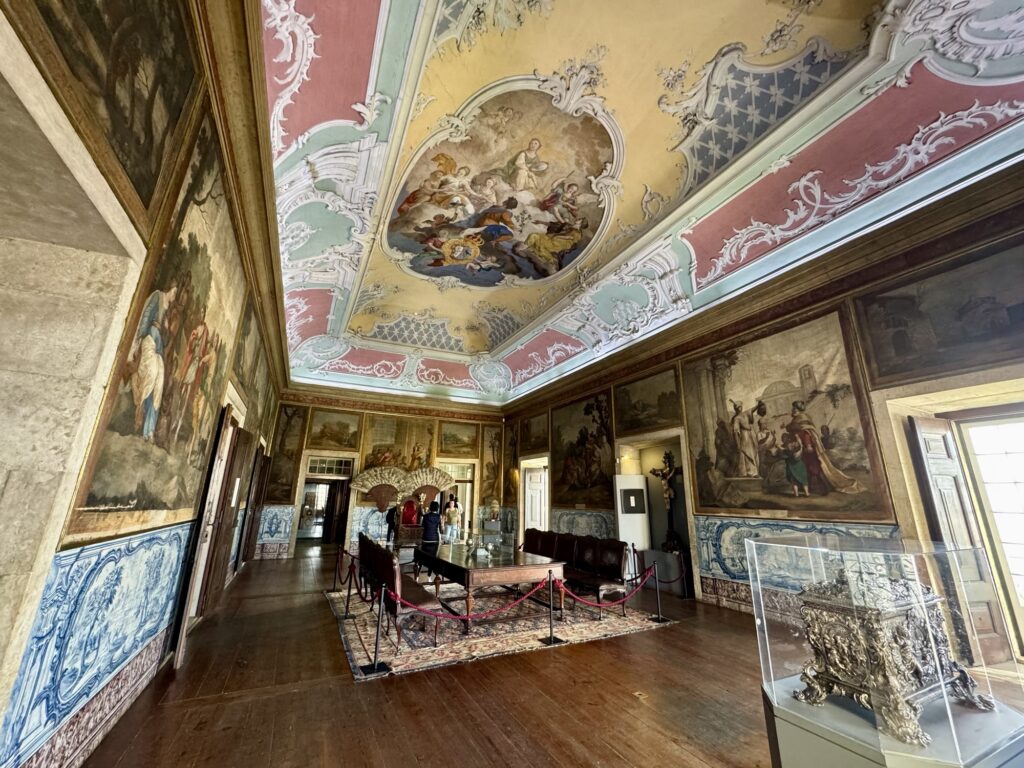
The ceiling paintings in particular were in stunning shape.
The paintings on the walls, done on canvas, weren’t aging quite as well, possibly due to air pollution, light exposure, and general grime.

The photo below is a detail from one of the wall paintings, showing the texture of the canvas and how it is impacting the paint.

Back down on the main level of the cathedral, you can walk under a riot of arches and stained glass. While the nave is quite dark, the parts past the transept are bright and dramatic.
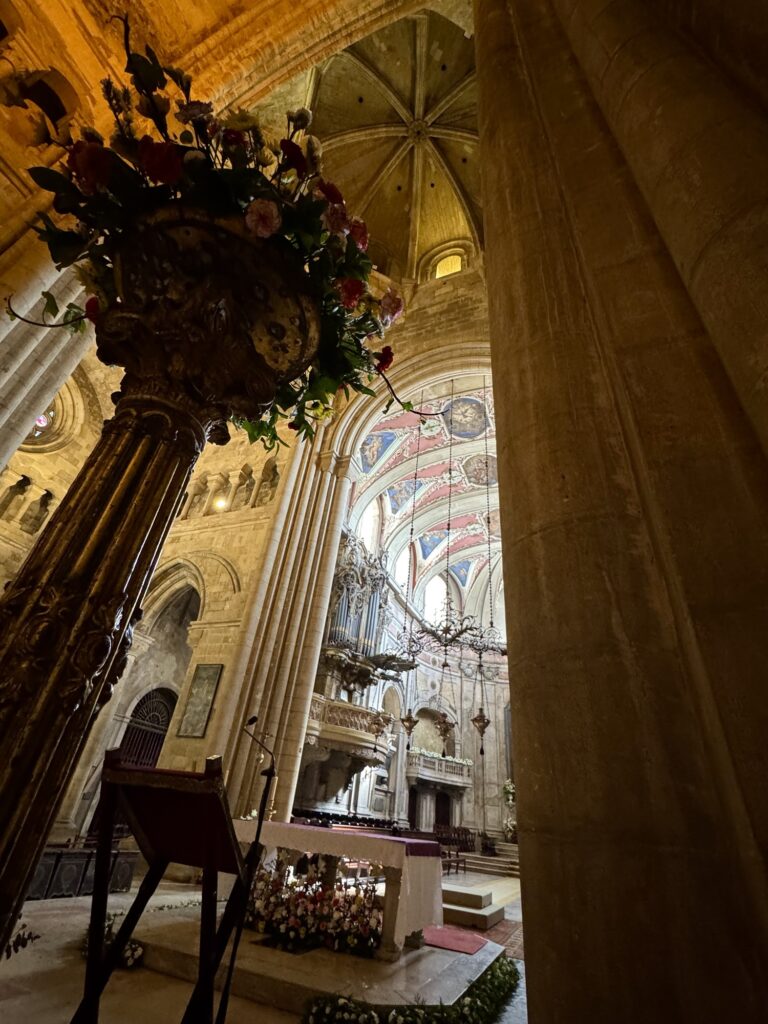
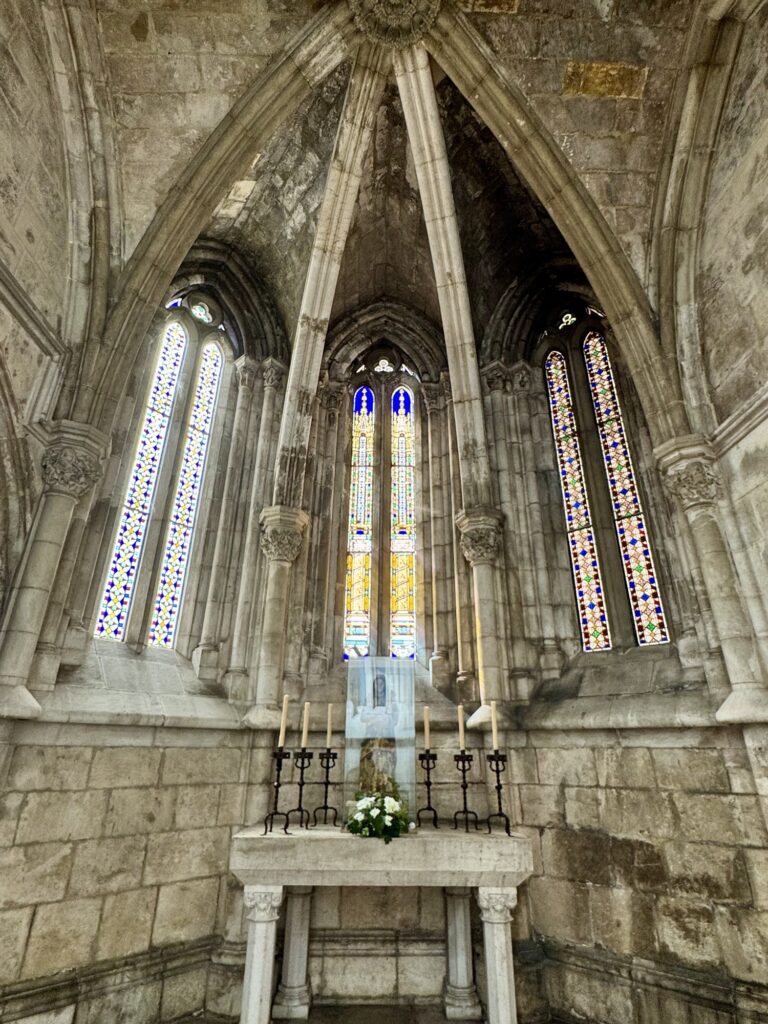
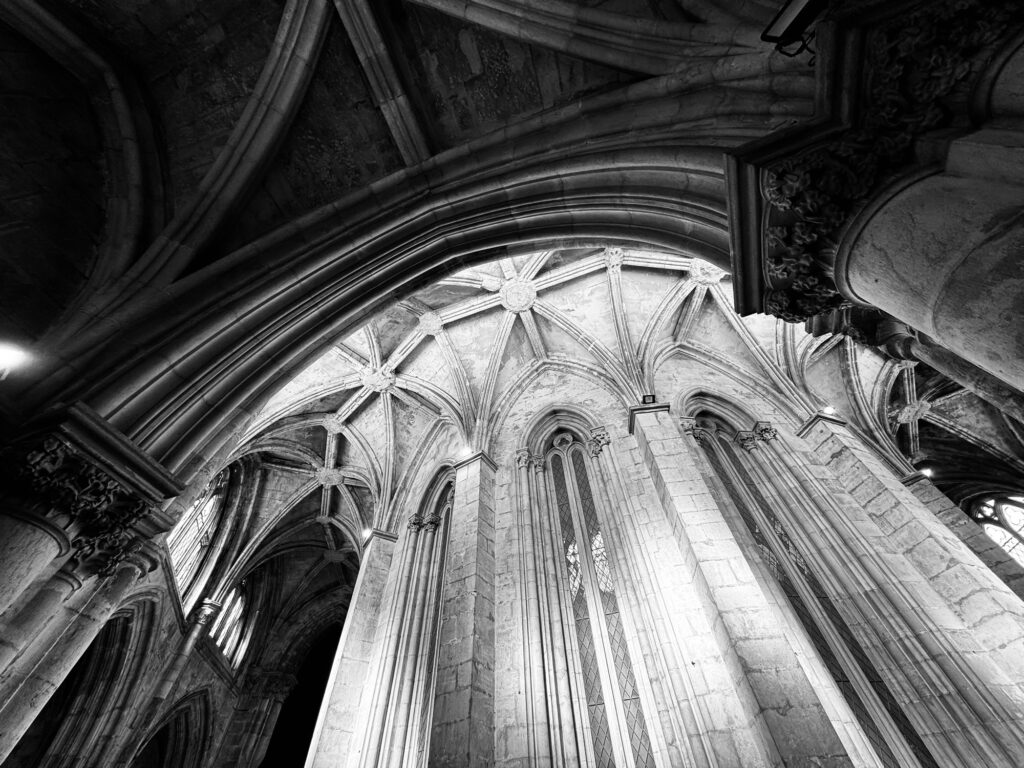
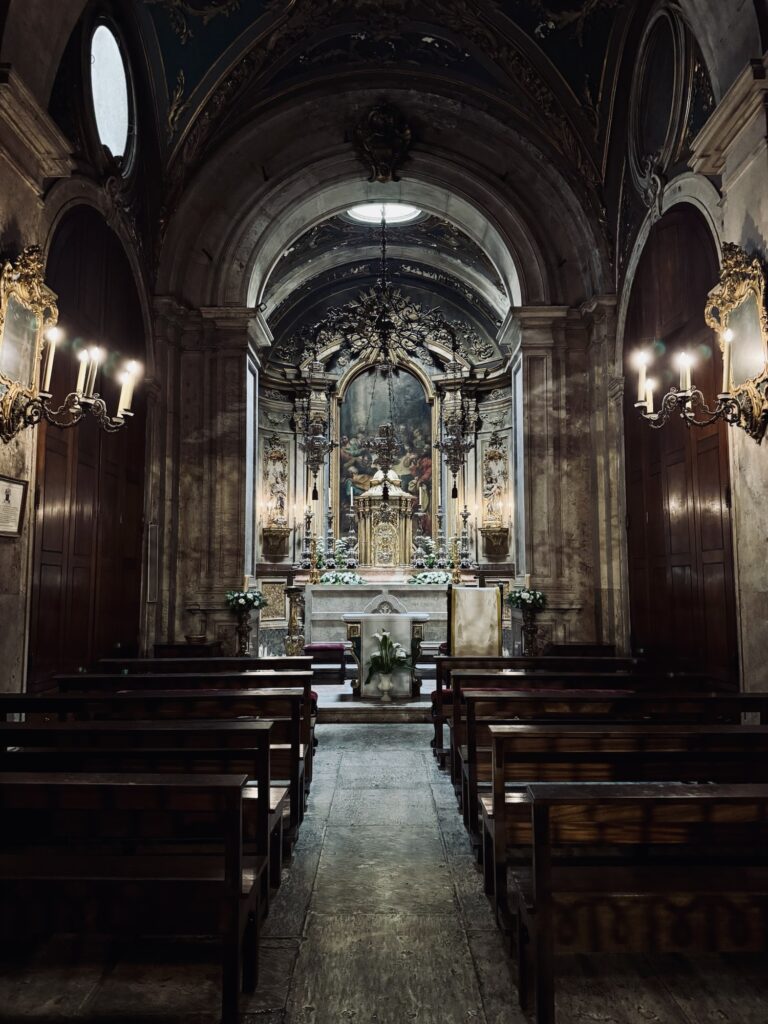
Amid the nooks and crannies of the chancel are various rooms, including this rather dramatic axial chapel:
After thoroughly exploring the main floor, I was anxious to get to the Roman ruins underneath and behind the chancel. It was the main reason I’d prioritized coming here. I had even booked my hotel nearby so it was easier to explore this area of Lisbon. I’d seen several text/photo displays around the nave, describing the archaeological work being done and the efforts to improve how the public can access the area.
But soon we were at the end of what we’d seen, and we’d seen no way to get to the Roman area. We finally asked.
The whole Roman part is closed right now for improvement.
Alas!
Later in the day, I even saw the area where they’re improving the Roman site for tourism. I regret not packing a grappling hook. All I have to do is scale one wall…