The city of Lisbon dates back to the Phoenicians, making it one of the oldest cities in Europe, with an age of about 3,200 years of continuous occupation. Its location upon an estuary, near the mouth of the Mediterranean, within a natural harbor made it perfect for shipping networks. The location upon natural hot springs even meant fresh water was abundant for stocking seafaring ships.
One of the things that fascinates me about old cities such as Lisbon is how the history of the place is visible in layers, as buildings and walls are reused and repurposed again and again. It’s easy to spot these layers if you are looking for them.
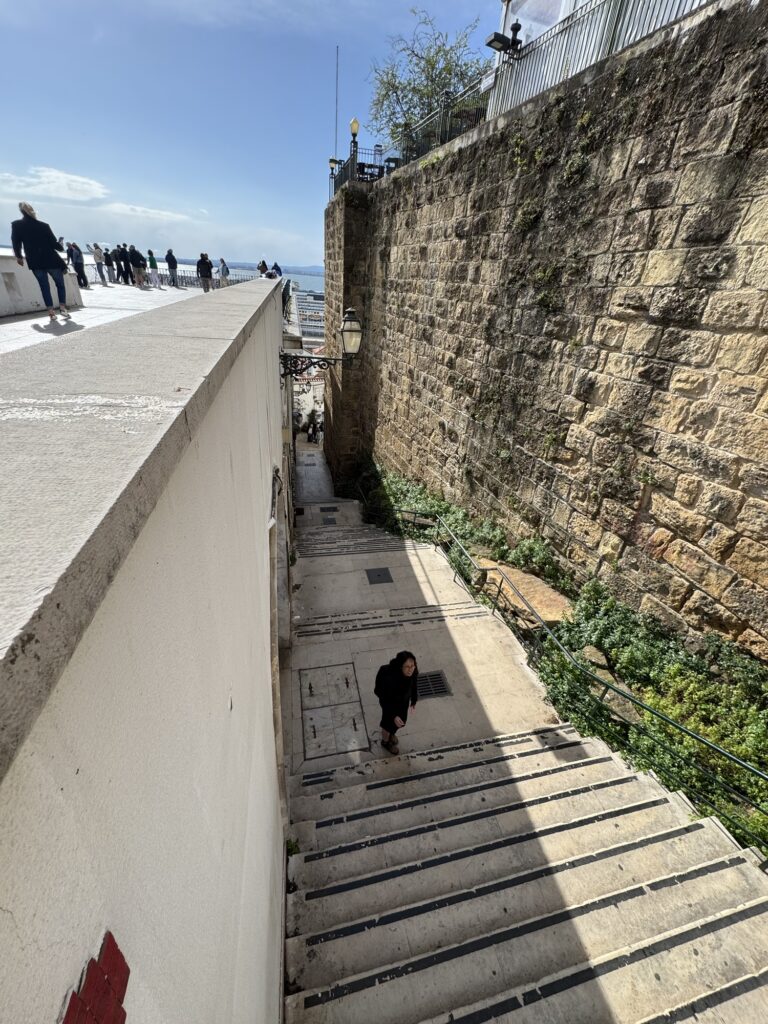
This narrow stair can be seen at the base of a church in Santa Maria Maior, next to a popular overlook of the river called Portas do Sol. The wall to the right is the original city wall of Lisbon, dating back to Roman times. If you follow a map of this wall, you will see how it disappears and reappears through the city. In places, it is incorporated into houses and other buildings.
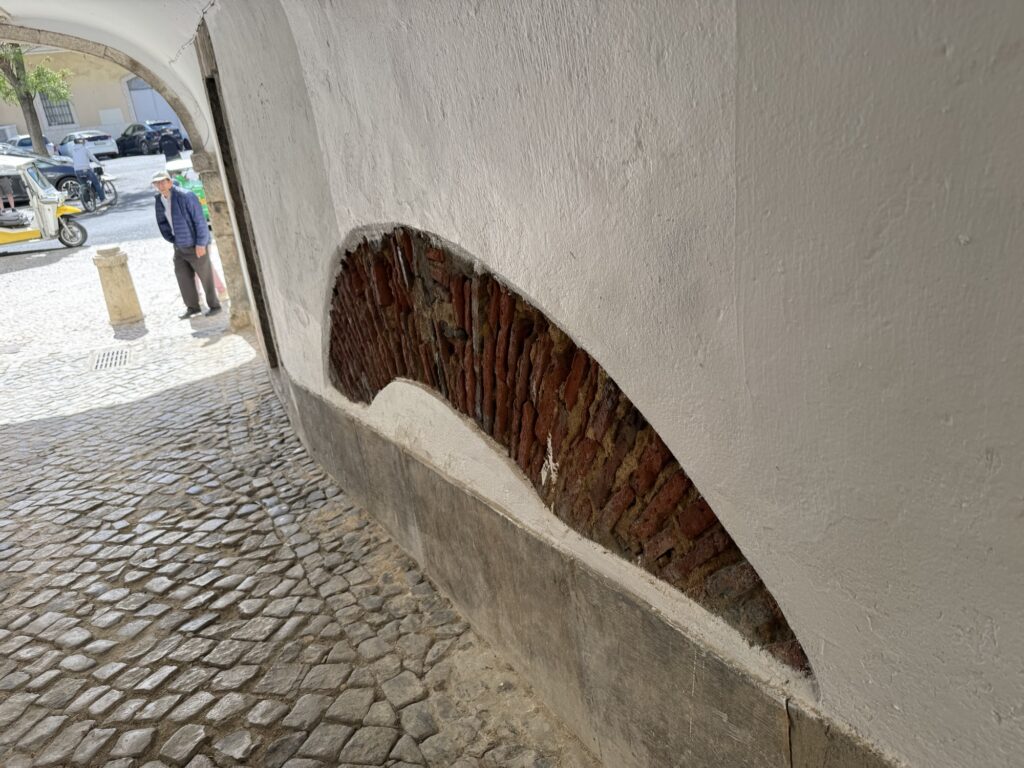
Here you can see a former archway or door, now sunken to street level and buried in a new wall as the city’s street level rose up around it. This effect is particularly strong in Lisbon, as much of the city was wiped out by a massive earthquake in 1755. The current “old town” is dominated by buildings dating back to the reconstruction after the earthquake.
In fact, you will notice the unusual stone streets next to the arch. These stones were hand-hewn from the stone wreckage after the earthquake. Almost all of the sidewalks in the city center look like this.
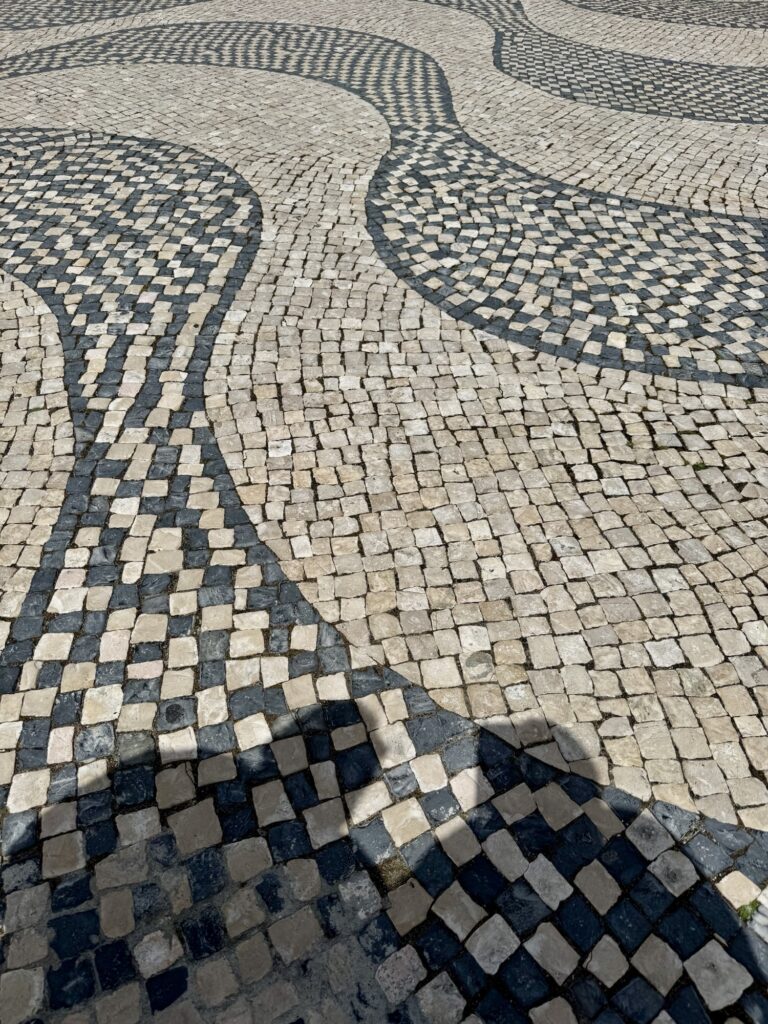
Here’s another example of these stone streets. Many, if not most, of these paved areas are decorated with intricate patterns. I hope to take many more photos of these mosaics over the next few days.
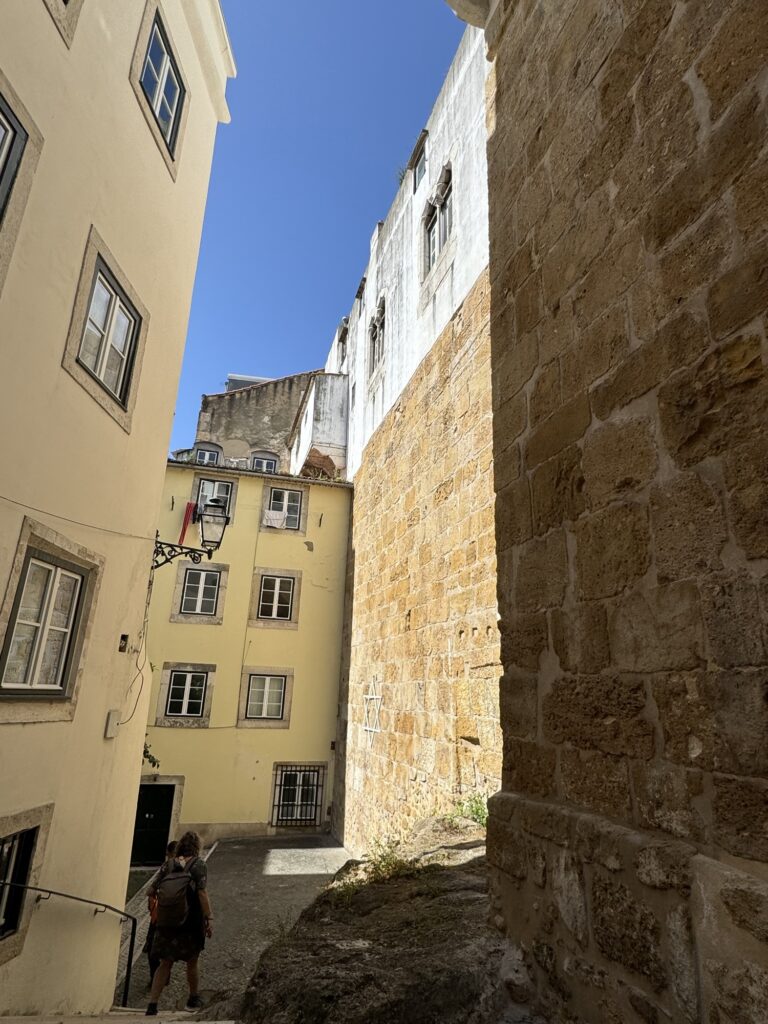
This is another part of the city wall, where you can see the rough-hewn base, the fitted stone walls, and a more modern building popped right on top of it. This segment is within the historical Jewish quarter of the city.
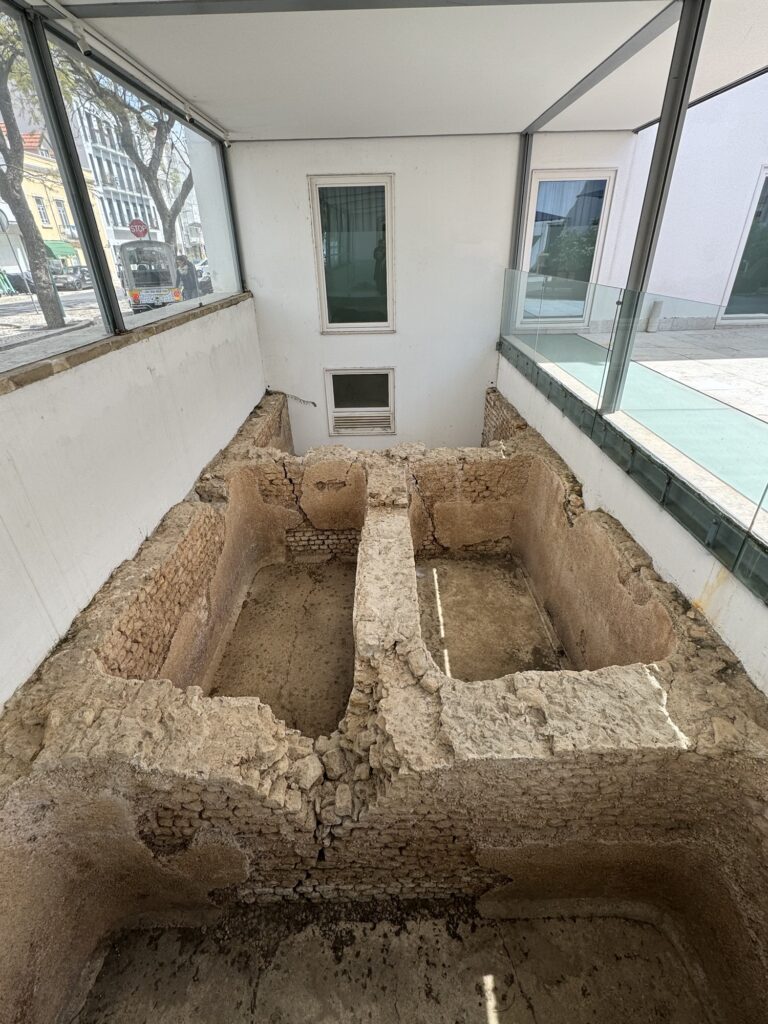
Finally, this can be seen from the street in front of the Palácio do Governador, a five-star hotel built upon/within the original governor’s house in the Belem neighborhood. In front of the historic building are these glassed-in areas, where you can go in and see these pits. This area is accompanied, at least today, by a very dapper and generous hotel bellman.
These pits were used by the Romans to make garum, a fundamental condiment of the Roman diet. It’s made from fish guts that were salted and left to ferment in the sun. The liquid was then squeezed out and eaten by pretty much everyone. The sauce is similar to soy sauce in that it was very salty and very umami.
These pits were generally on the edges of Roman cities because even back then, nobody wanted to smell fermenting fish guts all day.
But now, the fish gut pits are preserved in front of a luxury hotel, and that absolutely delights me.